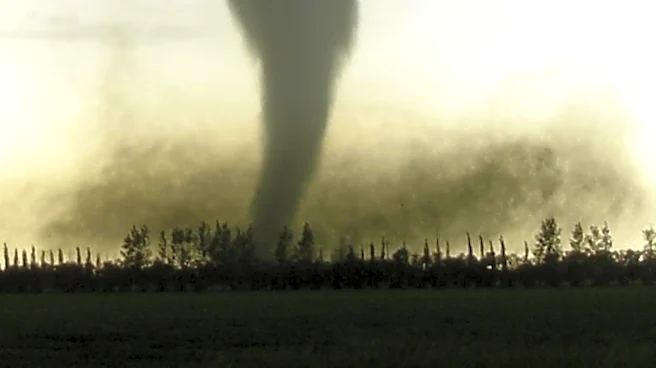










The 1899 New Richmond tornado is a landmark event in meteorological history, offering valuable insights into the dynamics of severe weather. This F5 tornado, which struck Wisconsin on June 12, 1899, left a path of destruction and prompted significant advancements in the study of tornadoes.
Formation and Path
The tornado formed in the early evening, around 6:00 PM CST, as a boiling cloud near Hudson, Wisconsin. It traveled northeast, following the Willow River and Omaha
Railroad, destroying farms and homes along its path. The tornado's path was approximately 45 miles long, with a width of over a quarter-mile, affecting St. Croix, Polk, and Barron counties.
The storm's highest winds exceeded 261 mph, marking it as an F5 on the Fujita scale. This classification indicates the tornado's extreme intensity, capable of causing complete destruction to well-built structures. The tornado's path included rural areas and the city of New Richmond, which suffered the most severe damage.
Scientific Advancements
The 1899 New Richmond tornado was significant for its contribution to meteorological research. Following the disaster, mechanical engineering professors at the University of Minnesota conducted an analysis and damage survey. They published a formula to estimate the relationship between a tornado's pressure and wind speed velocity, marking the first time forensic engineering methods were used to estimate a tornado's wind speed.
This research determined the tornado had a minimum wind speed of 134 miles per hour, providing valuable data for future studies. The advancements in understanding tornado dynamics helped improve forecasting and preparedness, reducing the impact of future storms.
Legacy in Meteorology
The New Richmond tornado remains a pivotal event in the history of meteorology. It was one of only six F5 tornadoes ever recorded in Wisconsin, highlighting the state's vulnerability to severe weather. The tornado's classification as an F5, with winds exceeding 200 mph, underscored the need for improved building codes and emergency response strategies.
The event prompted further research into tornado formation and behavior, influencing how meteorologists study and predict severe weather. The lessons learned from the New Richmond tornado continue to inform modern meteorological practices, ensuring communities are better prepared for similar events.
Overall, the 1899 New Richmond tornado serves as a reminder of the power of nature and the importance of scientific research in mitigating the impact of natural disasters.