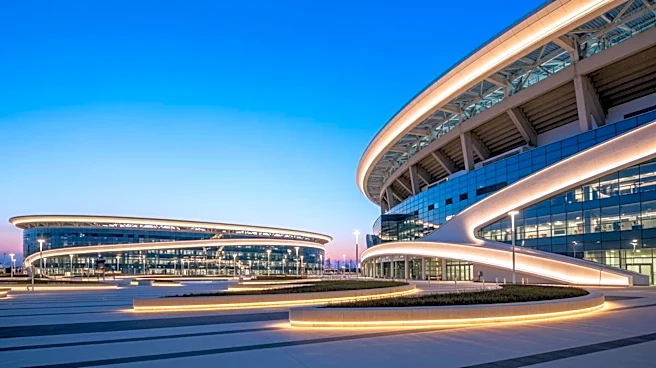









Stade de la Beaujoire, located in Nantes, France, has a rich history that reflects its evolution from a newly constructed stadium to a modern venue capable of hosting international events. This article delves into the stadium's development, highlighting key milestones and renovations that have shaped its current form.
The Birth of Stade de la Beaujoire
The idea for Stade de la Beaujoire emerged in the late 1970s, driven by the need for a larger and more comfortable venue for FC Nantes.
The previous stadium, Marcel-Saupin, was insufficient for the club's growing needs. Louis Fonteneau, then president of FC Nantes, championed the project, securing support from the French Football Federation and public authorities. The decision to build the new stadium was finalized in 1980, with construction beginning in 1982.
The stadium was strategically located in the northeast of Nantes, on the site of the former workers' housing area known as "La Baratte." The construction involved significant groundwork, including the use of 262 piles for the foundation and a steel frame weighing 2,000 tons. The stadium was completed in 1984, just in time for the UEFA European Championship, and was inaugurated with a friendly match between FC Nantes and Romania.
Renovations for the 1998 FIFA World Cup
In preparation for the 1998 FIFA World Cup, Stade de la Beaujoire underwent significant renovations. These improvements were aimed at enhancing the stadium's capacity and comfort for spectators. The renovations included the installation of wind protection, the addition of 15,000 seats to replace standing areas, and upgrades to access points and the playing surface.
The stadium's capacity was adjusted to 38,285 seats, and additional features such as improved lighting, sound systems, and video surveillance were introduced. These changes ensured that the stadium met international standards for hosting World Cup matches. During the tournament, Stade de la Beaujoire hosted six matches, including a memorable quarter-final between Brazil and Denmark.
Continued Use and Future Prospects
Despite its renovations, Stade de la Beaujoire was not selected for UEFA Euro 2016, but it continued to serve as a venue for various sports and cultural events. The stadium has hosted international rugby matches, including the Rugby World Cup, and is a popular site for music concerts.
Plans for a new stadium, YelloPark, were proposed to replace Stade de la Beaujoire, but the project was ultimately canceled in 2019. The existing stadium remains a vital part of Nantes' sporting infrastructure, continuing to host FC Nantes matches and other events. Its history and evolution reflect the dynamic nature of sports venues and their ability to adapt to changing needs and technologies.