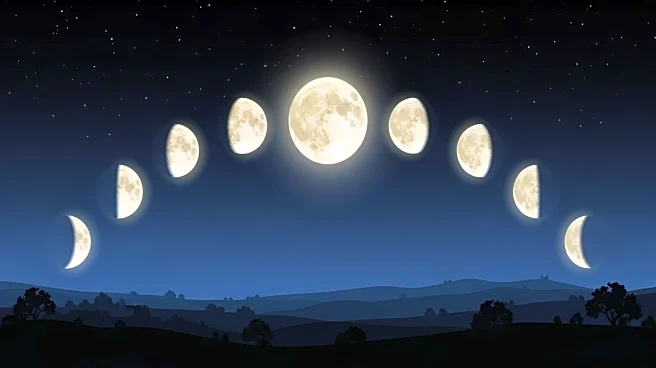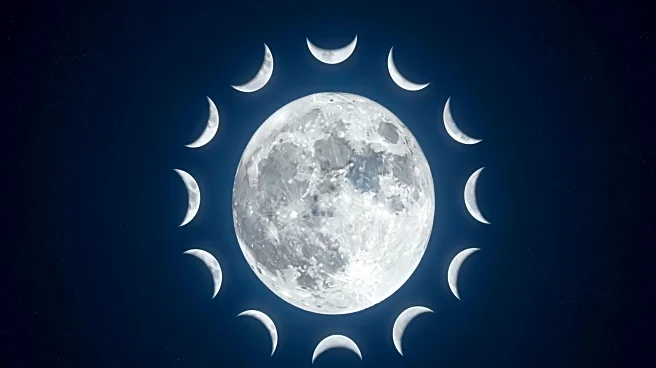


The Moon's phases have long been a subject of fascination and mystery. However, several misconceptions about lunar phases persist, even in modern times. This article aims to address and clarify some of the most common misunderstandings about the Moon's phases, providing a clearer picture of this celestial phenomenon.
The Dark Side of the Moon
One of the most prevalent misconceptions is the idea of the "dark side" of the Moon. Many people believe that one side of the Moon is perpetually
dark and never receives sunlight. In reality, both sides of the Moon receive equal amounts of sunlight over time. The term "dark side" actually refers to the side of the Moon that is not visible from Earth due to tidal locking, not because it is unlit.
The Moon is tidally locked to Earth, meaning the same side always faces our planet. As a result, the far side of the Moon, often mistakenly called the "dark side," is simply the side we cannot see from Earth. This side experiences day and night just like the near side, with sunlight illuminating it during its lunar day.
Orbital and Synodic Periods
Another common source of confusion is the difference between the Moon's orbital period and its synodic period. The Moon's orbital period, or sidereal period, is the time it takes to complete one orbit around Earth, which is approximately 27.3 days. However, the synodic period, or the time it takes for the Moon to complete a full cycle of phases, is about 29.5 days.
This discrepancy arises because the Earth is also orbiting the Sun. As the Moon orbits Earth, the Earth moves along its orbit, causing the Moon to take slightly longer to return to the same phase as seen from Earth. Understanding this difference is crucial for accurately predicting lunar phases and dispelling misconceptions about the Moon's cycle.
The Reality of Eclipses
Eclipses are another area where misconceptions about lunar phases often arise. Some people mistakenly believe that lunar phases are caused by the Earth's shadow falling on the Moon. In reality, lunar phases are the result of the Moon's position relative to the Earth and Sun, not the Earth's shadow.
Eclipses occur when the Earth, Moon, and Sun align in such a way that the Earth's shadow falls on the Moon (lunar eclipse) or the Moon's shadow falls on Earth (solar eclipse). These events are relatively rare compared to the regular cycle of lunar phases, which occur due to the changing angles of sunlight illuminating the Moon's surface.
By addressing these common misconceptions, we can gain a better understanding of the Moon's phases and appreciate the beauty and complexity of this celestial phenomenon. As our knowledge of the Moon continues to grow, it is essential to dispel myths and embrace the scientific explanations that enhance our appreciation of the night sky.