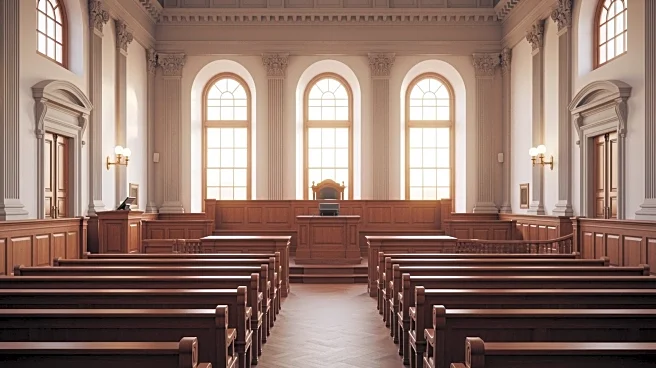




The Supreme Court of the United States, established in 1789, is the only court specifically created by the U.S. Constitution. Its early years were marked by foundational decisions and the establishment of judicial practices that would shape the future of American jurisprudence. This article delves into the Court's inception and its formative years under the leadership of its first three Chief Justices.
Establishment and Structure
The Judiciary Act of 1789 was pivotal in implementing
the federal judicial branch, including the Supreme Court. Initially, the Court was composed of six members, a number set by Congress rather than the Constitution itself. The Court convened for the first time on February 2, 1790, in New York City at the Old Royal Exchange, although it had no cases to hear at its inaugural session.
John Jay served as the first Chief Justice, and under his leadership, the Court began to establish its role in the federal government. The first docketed case was Van Staphorst v. Maryland in 1791, followed by its first recorded decision, West v. Barnes, in the same year. These early cases set the stage for the Court's function as a judicial body capable of interpreting the law.
Early Controversies and Amendments
One of the most controversial early decisions was Chisholm v. Georgia, where the Court held that the federal judiciary could hear lawsuits against states. This decision prompted significant backlash from several states, leading Congress to propose the Eleventh Amendment. Ratified in 1795, the Amendment granted states immunity from certain types of lawsuits in federal courts, showcasing the Court's influence on constitutional amendments.
Following Jay, John Rutledge briefly served as Chief Justice, succeeded by Oliver Ellsworth. During their tenures, the Court did not encounter major cases, but it continued to solidify its role within the federal government. The Court met in Philadelphia's City Hall from 1791 to 1801, lacking its own building until 1935.
Legacy of the Early Courts
The early years of the Supreme Court were crucial in establishing its authority and function within the U.S. government. The decisions made during this period laid the groundwork for the Court's future role in interpreting the Constitution and federal laws. The transition from Jay to Rutledge and Ellsworth marked a period of stability and gradual development.
These foundational years set the stage for the Marshall Court, which would later expand the Court's power through landmark decisions like Marbury v. Madison. The early Supreme Court's ability to influence constitutional amendments and its gradual establishment of judicial practices were significant in shaping the American legal landscape.