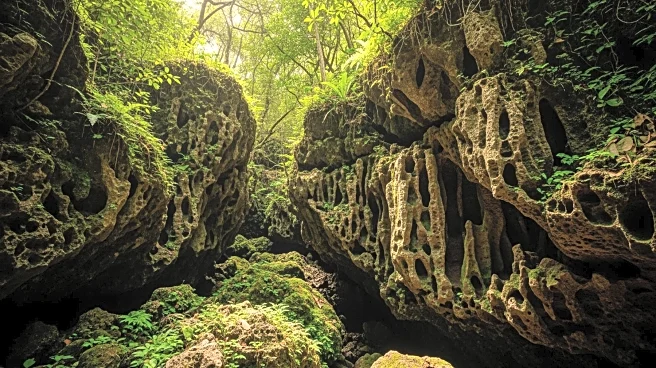




The National Park of American Samoa is a geological marvel, showcasing the dynamic processes that have shaped the islands over millions of years. Comprising three islands—Tutuila, Ofu, and Taʻū—the park is home to a variety of geological features, including shield volcanoes, sea cliffs, and coral reefs. This article delves into the geological history and features of the park, highlighting its significance as a natural wonder.
Volcanic Origins
The islands of American
Samoa are primarily composed of shield volcanoes, which developed from a hotspot on the Pacific Plate. These volcanoes emerged sequentially from west to east, with Tutuila being the largest and oldest island, dating back to the Pliocene Epoch approximately 1.24 to 1.4 million years ago. The smaller islands, Ofu and Taʻū, are most likely Holocene in age.
The islands are not made up of individual volcanoes but are rather composed of overlapping and superimposed shield volcanoes built by basalt lava flows. The volcanic activity has left behind trachyte plugs and exposed outcrops of volcanic tuff throughout the park, creating a unique landscape that attracts geologists and nature enthusiasts alike.
Geological Features
One of the most striking geological features of the park is the sea cliffs on Taʻū Island, which are among the highest in the world, reaching over 3,000 feet. These cliffs were formed by the collapse of a shield volcano during Holocene time, creating dramatic escarpments that offer breathtaking views of the ocean.
The park also boasts coral reefs, which are home to a diverse array of marine life. These reefs are under threat from rising ocean temperatures and carbon dioxide concentrations, making their preservation a priority for conservation efforts. The park's geological features are not only visually stunning but also play a crucial role in supporting the rich biodiversity found within its boundaries.
Geological Research and Conservation
The National Park of American Samoa is a valuable site for geological research, providing insights into the processes that have shaped the islands over time. Scientists study the park's geological features to better understand the history of volcanic activity in the region and the impact of environmental changes on the islands' ecosystems.
Conservation efforts are focused on preserving the park's geological features and mitigating the impacts of climate change. The park's management works to protect the coral reefs and maintain the integrity of the volcanic landscapes, ensuring that these natural wonders can be enjoyed by future generations.