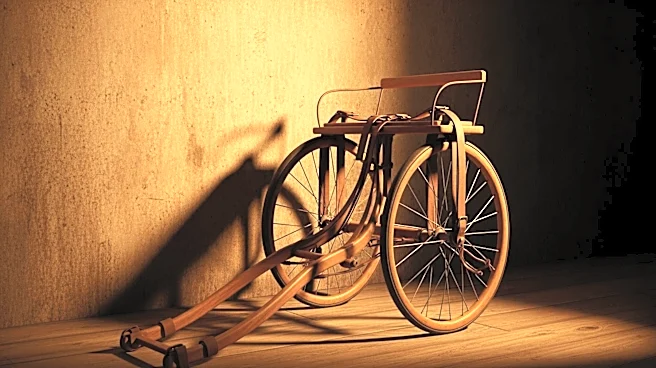




The dandy horse, also known as the Laufmaschine or draisienne, holds a significant place in the history of transportation. Invented by Karl Drais in 1817, this two-wheeled human-powered vehicle marked the beginning of the bicycle era. Unlike modern bicycles, the dandy horse was propelled by the rider's feet on the ground, making it a unique and innovative creation for its time. This article delves into the invention of the dandy horse and its impact
on transportation and society.
The Birth of the Dandy Horse
Karl Drais, a German inventor, introduced the world to the dandy horse in 1817. He called it the Laufmaschine, which translates to 'running machine' in German. This invention was revolutionary as it was the first two-wheeled vehicle that could be steered and propelled by human power. The dandy horse was made entirely of wood, with two wheels aligned in a straight line. The rider would sit astride the wooden frame and push along the ground with their feet, allowing them to travel faster than walking.
The dandy horse quickly gained popularity in Germany and France, where it was also known as the draisienne or velocipede. Its ability to double the average walking speed to around 10 mph on level ground made it an attractive option for those seeking faster transportation. Despite its cumbersome design, the dandy horse was a precursor to the modern bicycle, laying the foundation for future innovations in human-powered vehicles.
The Impact on Society and Transportation
The introduction of the dandy horse had a significant impact on society and transportation. It provided a new means of travel that did not rely on horses, which were scarce due to widespread crop failures and food shortages following the eruption of Mount Tambora in 1815. Drais envisioned the dandy horse as a practical solution for short-distance travel and dispatches, especially during wartime when horses were scarce.
However, the dandy horse faced challenges as it interacted with pedestrians on footpaths. Its heavy and cumbersome design led riders to prefer smooth pavements over rough roads, causing conflicts with pedestrians. This resulted in many municipalities enacting laws to prohibit its use on footpaths, including a ban in New York City.
Evolution and Legacy
Despite its brief popularity, the dandy horse paved the way for future bicycle designs. Manufacturers in France and England began creating their own versions, with improvements such as adjustable saddles to accommodate different riders. The dandy horse's design eventually evolved into the velocipede bicycle in the 1860s, which featured rotary cranks and pedals attached to the front-wheel hub.
Today, the dandy horse is recognized as the first bicycle, and its legacy lives on in modern balance bikes for children. These starter bicycles borrow from the dandy horse's design, allowing children to learn balance and coordination before transitioning to pedal-powered bicycles. The dandy horse's invention marked a turning point in transportation history, influencing the development of bicycles and shaping the way people travel.