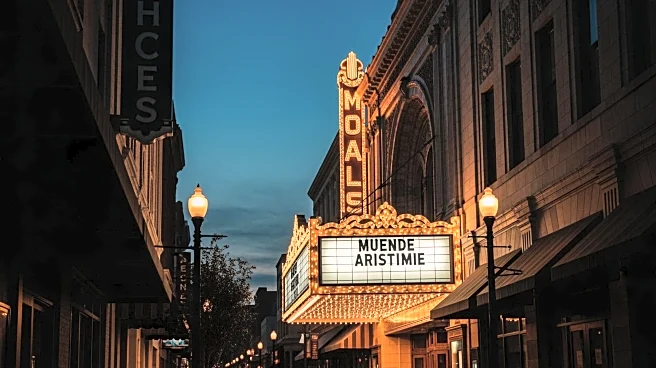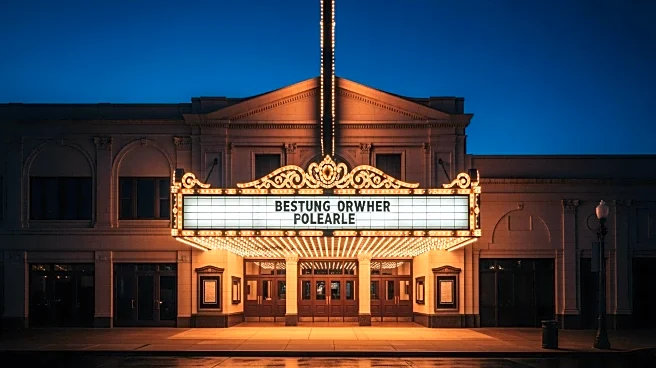




The Avalon Theatre in Easton, Maryland, stands as a testament to the rich cultural and architectural history of the early 20th century. Constructed in 1921, this Art Deco building has not only served as a venue for entertainment but also as a significant landmark in the community. Its inclusion on the National Register of Historic Places underscores its importance and the role it has played in the cultural life of Easton.
Architectural Significance
The Avalon Theatre is a prime
example of Art Deco architecture, a style that gained popularity in the United States during the 1920s and 1930s. This architectural style is characterized by its use of geometric shapes, bold colors, and lavish ornamentation. The Avalon Theatre's design reflects these elements, making it a standout structure in Easton. The building's facade and interior details capture the essence of the Art Deco movement, which sought to convey modernity and elegance.
Art Deco was not just an architectural style but a cultural movement that influenced various aspects of design, including fashion, art, and interior decoration. The Avalon Theatre's design is a reflection of this broader cultural trend, showcasing the era's fascination with progress and innovation. Its construction in 1921 places it at the forefront of this movement, making it a valuable piece of architectural history.
Cultural Impact
Beyond its architectural significance, the Avalon Theatre has played a crucial role in the cultural life of Easton. As a venue for films, live performances, and community events, it has been a gathering place for residents and visitors alike. The theater's ability to adapt to changing entertainment trends has allowed it to remain relevant over the decades.
The theater's inclusion on the National Register of Historic Places highlights its cultural importance. This designation not only recognizes the building's architectural value but also its role in the community's social and cultural history. The Avalon Theatre has been a witness to the evolution of entertainment and continues to be a cherished landmark in Easton.
A Venue for Music and More
In addition to its role as a theater, the Avalon has also been a venue for music recordings. Notably, it served as the recording site for Julian Lage and Chris Eldridge's 2014 album "Avalon." This highlights the theater's versatility and its ability to attract artists from various genres.
The Avalon Theatre's continued use for both traditional and contemporary performances ensures that it remains a vibrant part of Easton's cultural landscape. Its historical and architectural significance, combined with its ongoing role as a cultural hub, make it a true gem in the heart of Maryland.