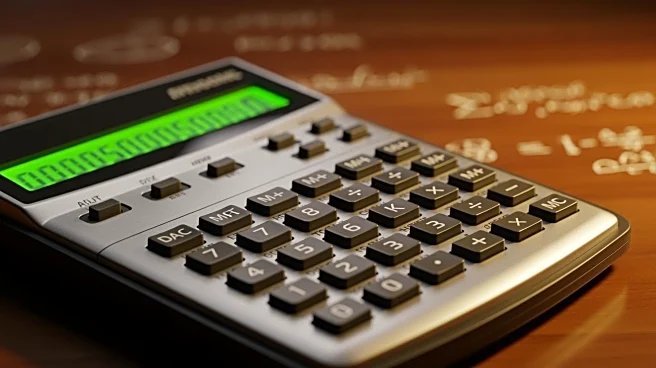

The HP-35, introduced by Hewlett-Packard in 1972, holds a special place in the history of technology as the world's first scientific pocket calculator. Its introduction marked a significant milestone,
not only for Hewlett-Packard but for the entire field of electronic calculators. This article explores the historical significance of the HP-35 and its enduring legacy in the world of technology.
A Pioneering Achievement
The HP-35 was a pioneering achievement in the world of calculators. Before its introduction, the only portable devices available for scientific calculations were slide rules, which were limited in their capabilities. The HP-35 changed this by offering a compact, portable device that could perform a wide range of scientific functions, including trigonometric and exponential calculations.
The calculator was named the HP-35 because it featured 35 keys, each carefully designed to provide maximum functionality. Its introduction was a bold move by Hewlett-Packard, as it was priced at $395, a significant amount at the time. Despite its high cost, the HP-35 quickly gained popularity among scientists, engineers, and students, who recognized its value as a powerful tool for calculations.
Recognition and Impact
The impact of the HP-35 was recognized by the Institute of Electrical and Electronics Engineers (IEEE), which named it an IEEE Milestone in 2009. This recognition highlighted the calculator's significance as a groundbreaking innovation in the field of electronics and computing.
The HP-35's success was evident in its sales figures. In its first year, Hewlett-Packard sold 100,000 units, and by the time it was discontinued in 1975, over 300,000 units had been sold. This widespread adoption demonstrated the calculator's impact on the scientific community and its role in shaping the future of technology.
Enduring Legacy
The legacy of the HP-35 extends beyond its immediate impact on scientific calculations. It paved the way for the development of more advanced calculators and computing devices, influencing the design and functionality of future technologies. The success of the HP-35 demonstrated the potential of portable electronic devices, inspiring further innovation in the field of personal computing.
Hewlett-Packard continued to build on the success of the HP-35, releasing subsequent models with enhanced features and capabilities. The HP-35's legacy is evident in the calculators and computing devices we use today, which owe much of their functionality and design to this pioneering device. The HP-35 not only transformed the way calculations were performed but also set the stage for the technological advancements that followed, cementing its place as a milestone in calculator history.