

The English Springer Spaniel is a breed with a rich history and a distinct evolution. Known for its role as a gun dog, this breed has undergone significant changes over the years, particularly in its divergence into show and working lines. This article delves into the historical development of the English Springer Spaniel, highlighting key milestones and the factors that have shaped its current form.
Origins and Early History
The English Springer Spaniel's roots can be traced
back to the mid-19th century, descending from the Norfolk or Shropshire Spaniels. These early spaniels were versatile hunting dogs, used for flushing and retrieving game. Less than a century ago, English Springer Spaniels and English Cocker Spaniels were not distinct breeds; they often came from the same litter. The smaller dogs were used for woodcock hunting, while the larger ones, known as springers, were used to flush other game birds.
In 1902, The Kennel Club recognized the English Springer Spaniel as a distinct breed, marking a significant milestone in its history. This recognition helped establish the breed's identity and set the stage for its future development. Over time, the breed's role expanded beyond hunting, as it became popular for its intelligence and trainability, leading to its use as a sniffer dog.
Divergence into Show and Working Lines
One of the most notable aspects of the English Springer Spaniel's evolution is its divergence into show and working lines. This divergence represents perhaps the greatest split between working and show lines of any dog breed. Field-bred and show-bred English Springer Spaniels appear almost like different breeds, despite being registered together.
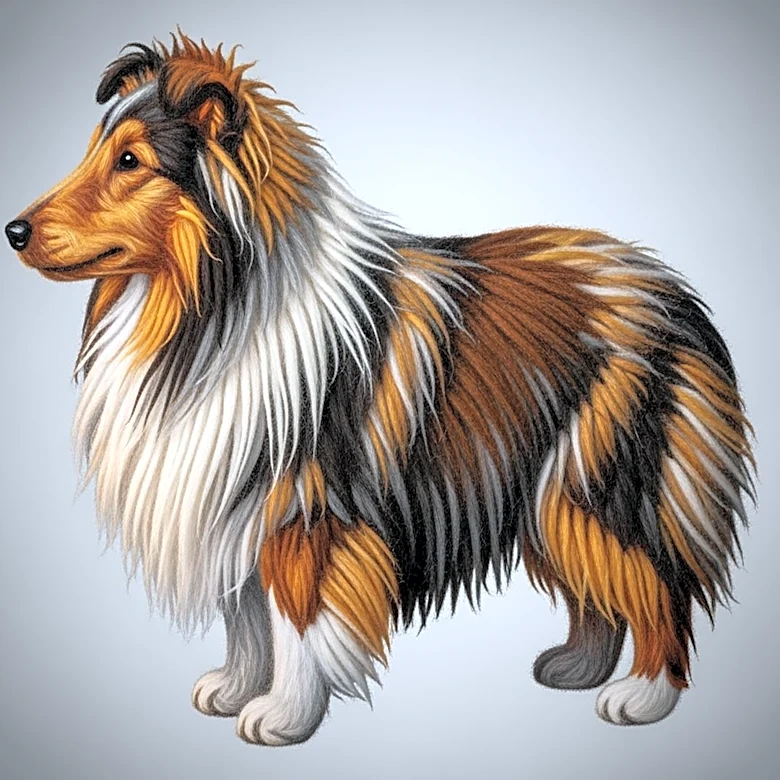
Field-bred dogs are selected for their hunting ability, sense of smell, and response to training. They tend to have shorter, coarser coats and less pendulous ears, giving them a more rugged appearance. In contrast, show-bred dogs are bred for their appearance, with longer fur, more pendant ears, and a heavier build. This divergence has been in place for at least 70 years, with the gene pools almost completely segregated.
Modern Roles and Uses
Today, the English Springer Spaniel continues to be a versatile breed, valued for both its working capabilities and its show qualities. Field-bred Springers are still used in hunting and field trials, where their speed and stamina are essential. Meanwhile, show-bred Springers are popular in dog shows, where their appearance and demeanor are judged.
Beyond hunting and showing, English Springer Spaniels have found roles in various detection tasks. They are widely used as sniffer dogs, capable of detecting explosives, drugs, and even bumblebee nests. Their intelligence and trainability make them excellent candidates for these roles, showcasing the breed's adaptability and enduring appeal.
In conclusion, the English Springer Spaniel's evolution is a testament to its versatility and adaptability. From its origins as a hunting dog to its modern roles in detection and showing, this breed has continually adapted to meet the needs of its handlers, while maintaining its distinct identity.