

The 24 Hours of Le Mans is renowned for its grueling endurance race, but it also serves as a platform for innovation through the Garage 56 program. This initiative allows concept cars to test new automotive technologies in a competitive environment. Since its inception, Garage 56 has been a stage for groundbreaking advancements, even though these vehicles are not expected to compete for victory.
The Birth of Garage 56
Garage 56 was introduced in 2010 as a special category
at the Circuit de la Sarthe, the home of the 24 Hours of Le Mans. The program was designed to accommodate teams presenting innovative projects that push the boundaries of automotive technology. The first entry came in 2012 with the DeltaWing, a unique rocket-shaped car supported by Nissan. The DeltaWing demonstrated impressive performance, nearly matching LMP2 cars while using significantly less fuel. However, its race ended prematurely due to a collision.
In 2013, the Swiss-designed GreenGT H2, a hydrogen-fueled car, was slated to be the first non-internal combustion engine vehicle to compete at Le Mans. Unfortunately, it was deemed unfit to race just days before the event. Despite this setback, the H2 completed a demonstration lap in 2016, showcasing its potential.
Notable Entries and Breaks
The Garage 56 program has seen a variety of innovative entries over the years. In 2014, the Nissan ZEOD RC, a hybrid electric car, took the spotlight. Although it retired early due to a gearbox issue, it achieved a top speed of 300 km/h and completed a lap using only electric power. The program took a hiatus in 2015 as no suitable applications were received.
In 2016, Frederic Sausset, a quadruple amputee, made history by driving a modified Morgan LMP2. Financial and technical challenges led to empty slots in 2017 and 2018, with no entries meeting the program's criteria. The COVID-19 pandemic further delayed plans in 2020, but the program resumed in 2021 with a team of disabled drivers, marking a significant milestone.
Recent Developments
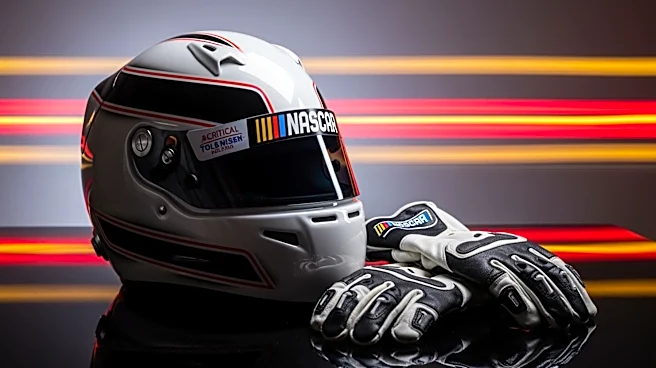
In 2023, Garage 56 featured a modified NASCAR Cup Series Chevrolet Camaro ZL1, celebrating NASCAR's 75th anniversary. The car was driven by notable figures like Jimmie Johnson and Jenson Button, highlighting the program's continued appeal to diverse automotive sectors.
Garage 56 remains a vital part of Le Mans, offering a unique opportunity for experimental vehicles to showcase their capabilities. While not competing for the win, these entries contribute to the evolution of automotive technology, making the program an integral aspect of the legendary race.