





The Saros cycle is a remarkable astronomical concept that has been used for centuries to predict eclipses. Its origins can be traced back to ancient civilizations, where it played a significant role in the study of celestial events. The Saros cycle, spanning 18 years, 11 days, and 8 hours, is a period after which the Earth, Moon, and Sun return to a similar alignment, resulting in nearly identical eclipses. This cycle has a rich history that highlights
the ingenuity of early astronomers.
Ancient Beginnings
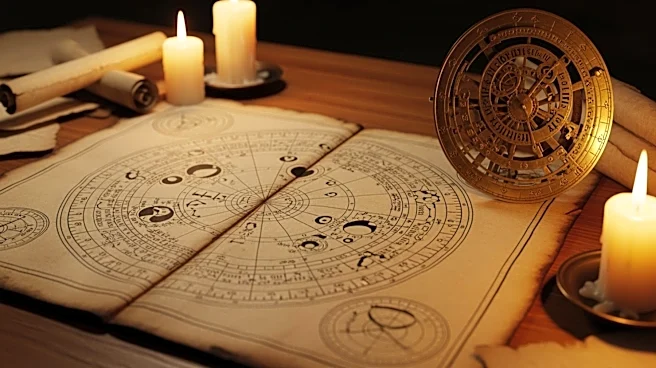
The earliest known use of the Saros cycle dates back to the Chaldeans, a group of ancient astronomers in Babylon. These astronomers recognized the regularity of eclipses and used the Saros cycle to predict them. The Chaldeans' understanding of the cycle was based on their observations of the Moon's phases and its alignment with the Sun and Earth.
The Saros cycle was later adopted by Greek astronomers, including Hipparchus and Ptolemy. These astronomers refined the concept and used it to enhance their predictions of celestial events. The ability to predict eclipses was highly valued in ancient times, as these events were often seen as omens or messages from the gods.
The Introduction of the Name "Saros"
The term "Saros" was introduced by Edmond Halley in 1686. Halley, a prominent English astronomer, borrowed the name from the Suda, a Byzantine lexicon. The Suda described the Saros as a measure used by the Chaldeans, who calculated it as 222 lunar months, equivalent to 18 years and 6 months.
Halley's adoption of the term "Saros" helped popularize the cycle in the scientific community. Despite some criticism of Halley's usage, the name has persisted and is now widely recognized in the field of astronomy. The Saros cycle's ability to predict eclipses with precision has cemented its place in the history of astronomy.
The Saros Cycle's Enduring Legacy
The Saros cycle's historical significance extends beyond its ability to predict eclipses. It represents a milestone in the development of astronomical knowledge and the understanding of celestial mechanics. The cycle's regularity and predictability have made it a valuable tool for astronomers throughout history.
Today, the Saros cycle continues to be used in modern astronomy. It allows for the accurate prediction of both solar and lunar eclipses, providing valuable insights into the movements of the Earth, Moon, and Sun. The Saros cycle's enduring legacy is a testament to the ingenuity of ancient astronomers and their contributions to our understanding of the cosmos.