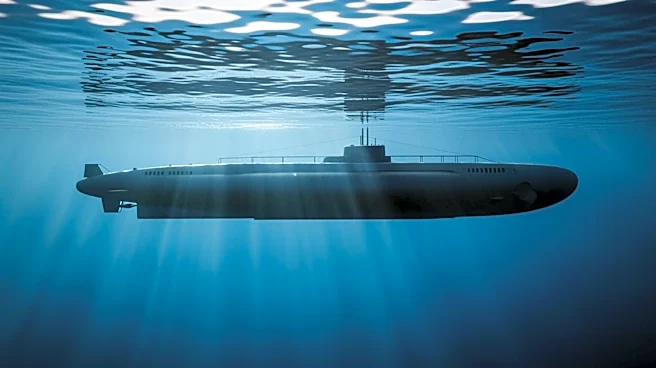







The USS Holland (SS-1) holds a significant place in naval history as the first submarine commissioned by the United States Navy. Designed by John Philip Holland, this vessel marked the beginning of a new era in naval warfare. Commissioned in 1900, the USS Holland was a groundbreaking achievement that set the stage for future developments in submarine technology. This article delves into the historical journey of the USS Holland, highlighting its design,
construction, and impact on naval operations.
Design and Construction
The USS Holland was originally laid down as Holland VI at the Crescent Shipyard in Elizabeth, New Jersey. The shipyard was under the supervision of John Philip Holland, who was instrumental in the design and construction of the submarine. Launched on May 17, 1897, the vessel was acquired by the U.S. Navy on April 11, 1900, and commissioned on October 12, 1900. The design of the USS Holland incorporated many features that would become standard in submarines of the early 20th century, such as a conning tower and ballast tanks for precise depth control.
The submarine was equipped with a 4-stroke Otto gasoline engine for surface travel and an electric motor for submerged operations. This combination allowed the USS Holland to travel at speeds of 6 knots on the surface and 5.5 knots underwater. The vessel's armament included a torpedo tube with three Whitehead Mark 2 torpedoes and a pneumatic dynamite gun in the bow. These features made the USS Holland a formidable addition to the U.S. Navy's fleet.
Service and Impact
After its commissioning, the USS Holland was used primarily for training purposes at the United States Naval Academy in Annapolis, Maryland. The submarine played a crucial role in training midshipmen and officers, preparing them for the operation of future submarines. The USS Holland's successful performance during its service led to the U.S. government ordering more submarines from Holland's company, known as the Plunger class.
The USS Holland's service history also included experimental purposes, where it provided valuable data for the development of future submarines. Its 166 nautical mile surface run from Annapolis to Norfolk in January 1901 was particularly noteworthy, as it demonstrated the submarine's capabilities over an extended period. The USS Holland's contributions to naval warfare were significant, as it laid the foundation for the development of a modern submarine fleet.
Legacy and Decommissioning
The USS Holland was decommissioned on July 17, 1905, and its name was struck from the Naval Vessel Register on November 21, 1910. Despite its relatively short service life, the USS Holland's impact on naval history was profound. It was sold for scrap in 1913, but its legacy lived on through the submarines that followed.
The USS Holland's pioneering design and successful service paved the way for future advancements in submarine technology. It demonstrated the potential of submarines as effective tools in naval warfare, influencing the development of subsequent submarine classes. The USS Holland remains a symbol of innovation and progress in naval engineering, marking the beginning of a new chapter in the history of the U.S. Navy.