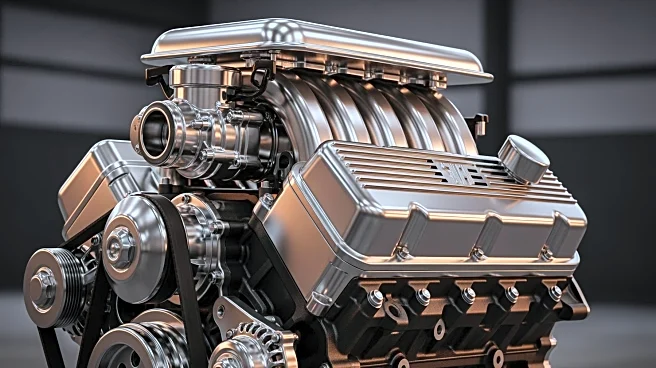



Ford's Coyote engine has become synonymous with high performance, powering some of the company's most iconic vehicles. Since its introduction in 2010, the Coyote engine has been a key player in Ford's lineup, offering impressive power and efficiency. Its versatility and adaptability have made it a favorite among enthusiasts and a staple in Ford's performance vehicles.
Power and Efficiency
The Coyote engine is renowned for its balance of power and efficiency. With a displacement
of 5.0 liters, it delivers substantial horsepower and torque, making it ideal for performance applications. The engine's advanced cam-torque-actuated (CTA) Twin Independent Variable Cam Timing (Ti-VCT) system allows for precise control of intake and exhaust cam timing, optimizing power output and fuel economy.
Ford's engineers designed the Coyote engine to compete with larger displacement engines from rival manufacturers. Despite its smaller size, the Coyote engine produces comparable power, thanks to its innovative design and engineering. The engine's compression ratio of 11.0:1 and port fuel injection system enable it to run on 87 octane gasoline, further enhancing its efficiency.
Applications in Ford Vehicles
The Coyote engine has been a staple in Ford's performance lineup, powering vehicles like the Mustang GT and the F-150 pickup truck. In the Mustang GT, the engine delivers exhilarating performance, with a redline of 7000 rpm and a power output of 435 hp. The Mustang GT's acceleration from zero to 60 mph in 4.6 seconds and top speed of 155 mph showcase the engine's capabilities.
In the F-150, the Coyote engine is tuned for torque, providing robust low-end and mid-range power. The engine's compression ratio is lowered to 10.5:1, and intake camshafts are adjusted for less duration, optimizing performance for truck applications. The F-150 variant also features cast iron exhaust manifolds and revised cylinder heads for improved cooling.
Performance Variants
Ford has developed several high-performance variants of the Coyote engine, each tailored for specific applications. The Boss 302 variant, known as Road Runner, features CNC ported heads, a higher lift exhaust camshaft profile, and lightened valvetrain components. These modifications increase power to 444 hp, with a redline of 7500 rpm.
The latest generation of the Coyote engine, debuting in the 2024 Mustang, pushes the boundaries of performance even further. With updates like a revised exhaust manifold and dual throttle bodies, the engine produces up to 500 hp in the Dark Horse trim level, solidifying its status as a performance powerhouse.