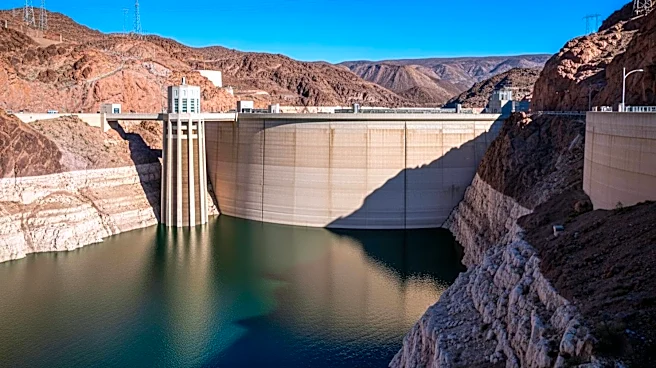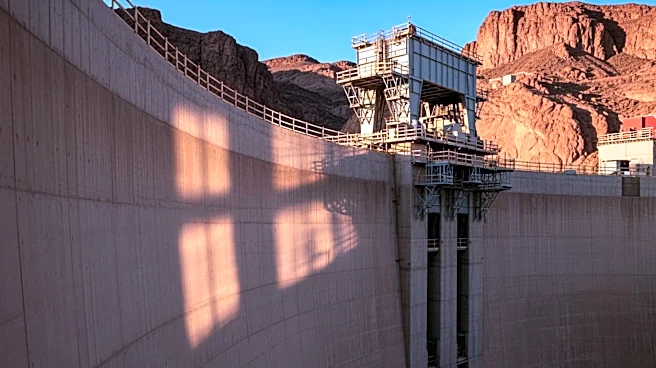







The Hoover Dam stands as a testament to human ingenuity and determination, constructed during the Great Depression between 1931 and 1936. This massive concrete arch-gravity dam, located in the Black Canyon of the Colorado River, was a groundbreaking project that required innovative engineering solutions and the labor of thousands of workers. The construction of Hoover Dam not only provided much-needed jobs during a time of economic hardship but also
showcased the potential of large-scale infrastructure projects to transform regions and economies.
Planning and Design
The idea of constructing a dam on the Colorado River had been considered since the early 1900s, primarily for flood control, irrigation, and hydroelectric power generation. The Bureau of Reclamation, then known as the Reclamation Service, played a pivotal role in the planning and design of the dam. After extensive surveys and studies, Black Canyon was selected as the ideal site for the dam due to its geological stability and proximity to a railway line from Las Vegas.
The design of the dam was overseen by John L. Savage, the Bureau's chief design engineer. The chosen design was a concrete arch-gravity dam, which would be thick at the base and thin at the top, with a convex face towards the water. This design allowed the dam to efficiently transfer the water's force into the canyon walls. The dam was to be 660 feet thick at the bottom and 45 feet thick at the top, with a height of 726 feet, making it the tallest dam in the world at the time.
Overcoming Construction Challenges
The construction of Hoover Dam presented numerous challenges, from the harsh desert environment to the sheer scale of the project. One of the first tasks was to divert the Colorado River away from the construction site. This was achieved by drilling four massive diversion tunnels through the canyon walls, two on each side of the river. These tunnels, each 56 feet in diameter, allowed the river to bypass the dam site, enabling construction to proceed.
Excavation of the dam site required the removal of millions of cubic yards of rock and sediment to reach solid bedrock. High scalers, workers suspended from ropes, were employed to clear loose rock from the canyon walls, a dangerous job that resulted in several fatalities. The extreme heat of the desert, with temperatures often exceeding 100 degrees Fahrenheit, added to the difficulties faced by the workers.
Concrete Pouring and Completion
Pouring the concrete for the dam was a monumental task. Engineers calculated that if the dam were poured as a single continuous block, it would take over a century to cool and cure, leading to potential cracking. To address this, the dam was constructed in interlocking blocks, each five feet high. Cooling pipes were embedded in the concrete to expedite the curing process, with cold water circulated through them to remove heat.
The first concrete was poured in June 1933, and by May 1935, the dam was structurally complete. The dedication ceremony took place on September 30, 1935, with President Franklin D. Roosevelt in attendance. Although the powerhouse and other structures were not yet finished, the dam began impounding water, forming Lake Mead, the largest reservoir in the United States.
The completion of Hoover Dam was a significant achievement, demonstrating the potential of large-scale engineering projects to overcome natural challenges and provide lasting benefits. The dam continues to serve as a critical source of water and power for the southwestern United States, a testament to the vision and perseverance of those who built it.