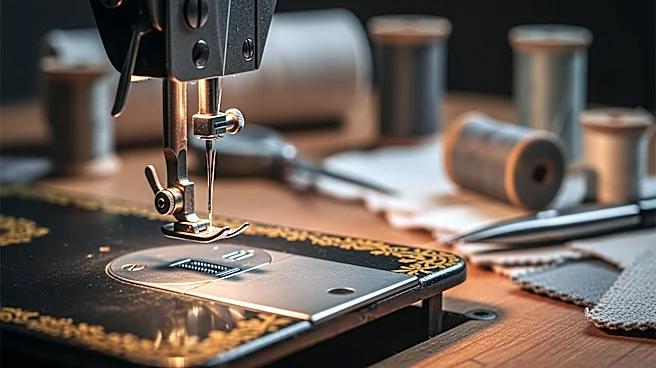

James Edward Allen Gibbs, an American inventor from Virginia, made a significant contribution to the sewing industry with his invention of the twisted chain-stitch sewing machine. This innovation, patented
in 1857, marked a turning point in sewing technology and had a lasting impact on the industry.
The Birth of a Revolutionary Invention
In the mid-19th century, the sewing industry was on the brink of transformation. On June 2, 1857, James Edward Allen Gibbs was awarded a patent for his groundbreaking invention: the first twisted chain-stitch single-thread sewing machine. This machine utilized a rotating hook, a novel mechanism at the time, which allowed for more efficient and reliable stitching. Gibbs's invention was a significant advancement over existing sewing machines, which often used more complex and less reliable mechanisms.
Gibbs's sewing machine was not only innovative in its design but also in its application. The twisted chain-stitch mechanism provided a more durable stitch, which was less prone to unraveling compared to other stitches used in sewing machines of that era. This made Gibbs's machine particularly appealing to both home sewers and commercial manufacturers, who required reliable and efficient sewing solutions.
Partnership and Business Expansion
Following the success of his invention, Gibbs partnered with James Willcox to form the Willcox & Gibbs Sewing Machine Company. This partnership was instrumental in bringing Gibbs's invention to a broader market. The company was established in 1857, the same year Gibbs received his patent, and quickly gained a reputation for producing high-quality sewing machines.
In 1859, the company expanded its reach by opening an office in London, located at 135 Regent Street. This move was strategic, as it allowed Willcox & Gibbs to tap into the European market, where there was a growing demand for efficient sewing machines. By 1871, the company had further expanded its presence in Europe, with offices at 150 Cheapside and later at 20 Fore Street in London.
Lasting Impact and Legacy
The Willcox & Gibbs sewing machine became renowned for its circular design, which remained popular well into the early 20th century. This design was not only aesthetically pleasing but also functional, as it facilitated the use of the Gibbs rotary twisted chain stitch mechanism. The machine's popularity was a testament to its reliability and efficiency, qualities that were highly valued by users.
Gibbs's invention had a lasting impact on the sewing industry, influencing the design and functionality of future sewing machines. His contribution is commemorated in the community of Raphine, Virginia, named after his family's farm, which he named "Raphine" after the Greek word "raphis," meaning "to sew." This legacy highlights the enduring significance of Gibbs's innovation in the world of sewing.