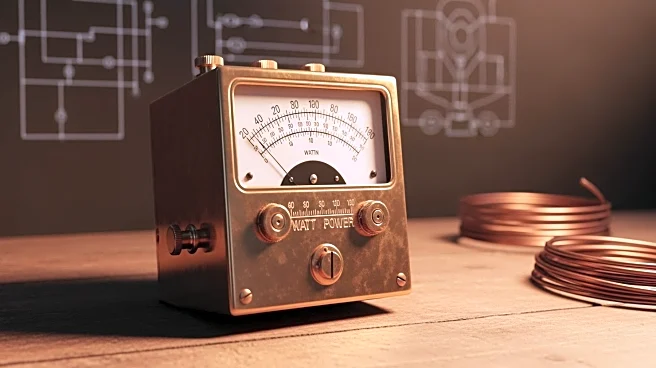


The watt is a fundamental unit of power in the International System of Units (SI), representing the rate of energy transfer. Named after James Watt, a Scottish inventor and engineer, the watt has played a significant role in the development of modern technology. This article explores the history and significance of the watt as a unit of power.
Origins of the Watt
The watt is named in honor of James Watt, who made significant contributions to the development of steam engines
during the Industrial Revolution. His improvements to the Newcomen engine laid the foundation for modern mechanical engineering and greatly increased the efficiency of steam engines.
The unit was proposed by C. William Siemens in 1882, who suggested that it be named after Watt to honor his contributions to the field of physics. The watt was officially adopted as a unit of power in 1908 at the International Conference on Electric Units and Standards.
Definition and Usage
In the SI system, one watt is defined as one joule per second, or the rate at which work is done when an object's velocity is held constant against a constant opposing force. This definition highlights the relationship between energy and time, emphasizing the importance of power in measuring energy transfer.
The watt is used to quantify the rate of energy transfer in various applications, including electrical systems, mechanical systems, and radiant flux. It is a versatile unit that can be applied to different fields, making it essential for understanding energy consumption and efficiency.
Impact on Modern Technology
The adoption of the watt as a unit of power has had a profound impact on modern technology. It provides a standardized measure for comparing the efficiency and performance of different systems, from engines to electrical devices. This standardization has facilitated advancements in engineering and technology, allowing for more precise calculations and designs.
The watt is also used in everyday applications, such as measuring the power consumption of household appliances and electronic devices. Understanding the watt and its significance helps consumers make informed decisions about energy usage and efficiency.
Overall, the watt is a crucial unit of power that has shaped the development of modern technology. Its historical significance and practical applications continue to influence the way we understand and utilize energy.