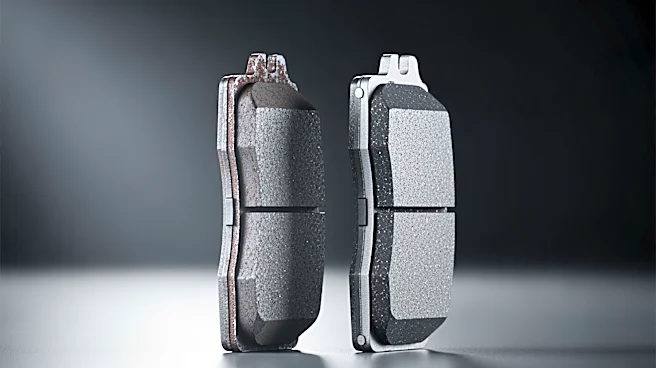



Brake pads are a crucial component of modern vehicles, playing a vital role in ensuring safety and performance. Their development over the years has been marked by significant technological advancements and material innovations. This article explores the historical journey of brake pads, from their early inception to the sophisticated designs used in today's vehicles.
Early Beginnings and Innovations
The concept of brake pads dates back to the early 20th century. The initial idea
of using disc brakes as an alternative to drum brakes was patented by F. W. Lanchester in 1902. However, due to high costs and inefficiencies, disc brakes did not gain widespread use until after World War II. The turning point came in 1953 when a Jaguar equipped with disc brakes won the 24 Hours of Le Mans race, showcasing the superior performance of this technology.
The success of the Jaguar at Le Mans highlighted the advantages of disc brakes, particularly their ability to handle high speeds and provide reliable stopping power. This victory spurred further interest and development in brake technology, leading to the gradual adoption of disc brakes in European cars by the 1960s.
Material Advancements and Environmental Concerns
As vehicle speeds increased, the need for more effective brake materials became apparent. Initially, asbestos was widely used in brake pads due to its heat-absorbing properties. However, the health risks associated with asbestos exposure led to the development of alternative materials. Today, brake pads are made from a variety of materials, including non-metallic, semi-metallic, fully metallic, and ceramic compounds.
Each material offers distinct advantages and drawbacks. For instance, non-metallic pads are gentle on rotors but produce more dust, while semi-metallic pads offer better fade resistance but can wear down rotors more quickly. The shift away from asbestos has also been driven by environmental regulations, such as those in Washington State, which limit the use of copper and other harmful substances in brake materials.
Modern Innovations and Future Directions
In recent years, brake pad technology has continued to evolve, with a focus on improving performance and reducing environmental impact. High-performance vehicles often use advanced materials like ceramic pads, which offer a balance between durability and noise reduction. Additionally, research is ongoing to develop friction materials with reduced environmental toxicity.
The future of brake pads may see further innovations in materials and design, driven by the increasing adoption of electric vehicles and the need for more sustainable solutions. As technology advances, brake pads will continue to play a critical role in vehicle safety and performance, adapting to meet the demands of modern transportation.