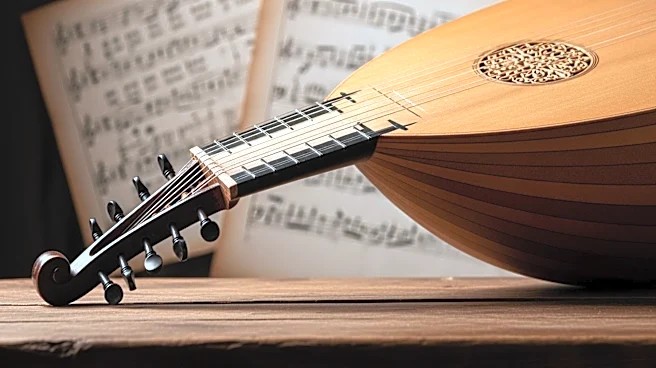







Lute songs, a distinctive musical style, emerged during the late Renaissance and early Baroque periods, primarily in England and France. These compositions were characterized by their strophic form and homophonic texture, typically written for a solo voice accompanied by a lute. As the musical landscape evolved, lute songs underwent significant transformations, reflecting broader changes in musical composition and performance practices.
The Origins of Lute Songs
Lute songs
originated in the late 16th century, a time when the Renaissance was giving way to the Baroque era. This period was marked by a shift towards more expressive and elaborate musical forms. Lute songs were generally composed in strophic form, meaning they consisted of repeated verses, and featured a homophonic texture, where the melody was supported by chords. The lute, a plucked string instrument with a deep round back, was the primary accompaniment, although other string instruments like the bass viol were sometimes used.
The composition of lute songs was influenced by the cultural and artistic movements of the time. In England and France, these songs were often performed solo or with a small group of instruments, allowing for intimate and nuanced musical expression. The lute's ability to produce a wide range of tones made it an ideal instrument for accompanying the human voice, and its popularity soared during this era.
Transition to the Baroque Era
As the Baroque era began to take shape, lute songs evolved to reflect the changing musical tastes and practices. The Baroque period was characterized by greater complexity in musical composition, with an emphasis on contrast and ornamentation. Lute songs began to incorporate more voices, moving beyond the solo format to include duets and small ensembles. This shift allowed for richer harmonies and more intricate musical interplay.
The role of the lute also expanded during the Baroque era. While it continued to serve as an accompaniment for vocal performances, it became increasingly prominent in instrumental compositions. The lute's versatility and expressive capabilities made it a favorite among composers seeking to explore new musical ideas and forms.
The Legacy of Lute Songs
Lute songs left a lasting impact on the development of Western music. Their influence can be seen in the works of later composers who drew inspiration from the expressive potential of the lute and the intimate nature of the solo voice. The transition from Renaissance to Baroque lute songs marked a significant turning point in musical history, paving the way for the complex and dynamic compositions that would define the Baroque era.
Today, lute songs are celebrated for their beauty and historical significance. They offer a glimpse into the musical traditions of the past and continue to be performed and studied by musicians and scholars alike. The evolution of lute songs from the late Renaissance to early Baroque periods highlights the enduring power of music to adapt and transform across time.