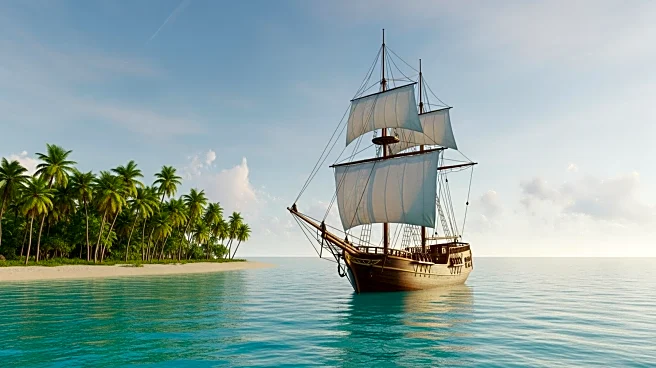




John Williams, an English missionary, embarked on a remarkable journey through the South Pacific in the early 19th century. His mission was to spread Christianity across the Polynesian islands, a task that required immense dedication and resilience. This article explores Williams's travels, the challenges he faced, and the impact of his work on the islands he visited.
Setting Sail for the Society Islands
In 1816, John Williams and his wife, Mary, set sail from London to the Society Islands,
a group of islands that included Tahiti. Accompanied by fellow missionaries William Ellis and his wife, the Williamses initially reached Eimeo, west of Tahiti. After spending several months there, they finally arrived in Tahiti in 1817, where they began their missionary work.
The couple established their first missionary post on the island of Raiatea. From this base, they traveled to various Polynesian islands, spreading their message and establishing a Christian presence. Their journey was not without challenges, as they had to navigate language barriers and cultural differences. However, their determination and faith helped them overcome these obstacles.
Expanding the Missionary Efforts
One of John Williams's significant achievements was his work in the Cook Islands. In 1821, he landed on Aitutaki and used Tahitian converts to carry the Christian message to the Cook Islanders. This approach proved successful, and Williams continued to expand his missionary efforts across the region.
In 1827, Williams built a ship called the Messenger of Peace from local materials, allowing him to reach more remote islands. His travels took him to Samoa, where he played a crucial role in converting Malietoa Vaiinuupo, a powerful local leader, to Christianity. This conversion marked a significant milestone in the spread of Christianity in Samoa and demonstrated Williams's ability to connect with local communities.
Legacy and Influence
John Williams's missionary journey came to a tragic end in 1839 when he was killed by cannibals on the island of Erromango in the New Hebrides. Despite this tragic event, his legacy lived on through the communities he touched and the missionaries who followed in his footsteps.
The London Missionary Society honored Williams by naming a series of missionary ships after him, ensuring that his contributions would not be forgotten. His work laid the foundation for the spread of Christianity in the South Pacific, and his story continues to inspire future generations of missionaries. Monuments and memorials in the region serve as a testament to his enduring impact, reminding us of the challenges and triumphs of his missionary journey.