
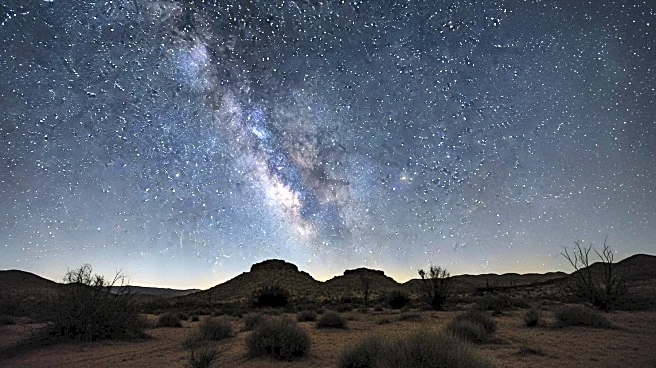
The Leo constellation, known for its distinctive shape resembling a crouching lion, is one of the most easily recognizable constellations in the night sky. Located in the Northern celestial hemisphere, Leo is home to a variety of astronomical features, including bright stars, galaxies, and meteor showers. This article explores the fascinating astronomical characteristics of the Leo constellation, offering insights into its stellar composition and celestial phenomena.
Bright Stars and Asterisms
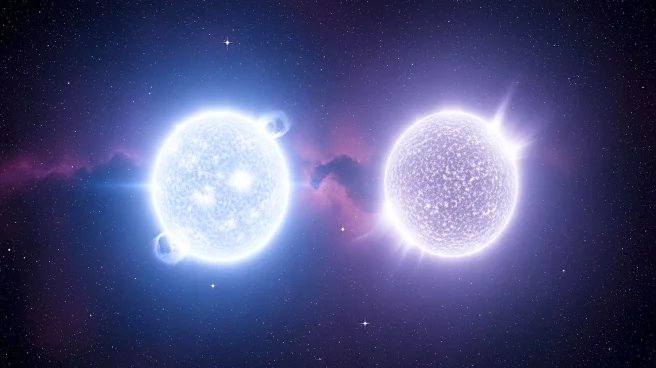
Leo contains several bright stars that contribute to its prominence in the night sky. The constellation's brightest star, Regulus, is a blue-white main-sequence star that forms part of a quadruple star system. Regulus is accompanied by other notable stars such as Denebola, Algieba, and Zosma, each contributing to Leo's distinctive shape.
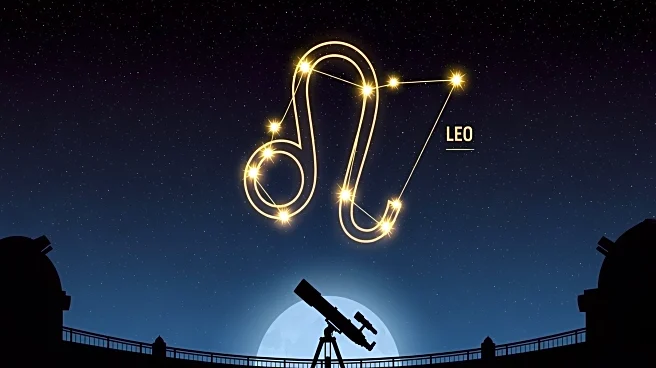
An interesting feature within Leo is the asterism known as "The Sickle," which resembles a backward question mark. This asterism is formed by six stars: Epsilon Leonis, Mu Leonis, Zeta Leonis, Gamma Leonis, Eta Leonis, and Alpha Leonis (Regulus). The Sickle marks the lion's mane, while the rest of the constellation forms an isosceles triangle representing the lion's body and tail.
Galaxies and Deep-Sky Objects
Leo is home to several bright galaxies, making it a popular target for amateur astronomers. Among these are the Messier 65, Messier 66, and NGC 3628, collectively known as the Leo Triplet. These galaxies are located approximately 37 million light-years away and are known for their gravitational interactions, which have led to distorted shapes and star formation.
Other notable galaxies within Leo include Messier 95, Messier 96, and Messier 105, each offering unique features and structures. The Leo Ring, a cloud of hydrogen and helium gas, is found in the orbit of two galaxies within the constellation, adding to its astronomical intrigue.
Meteor Showers and Celestial Events
The Leo constellation is associated with the Leonids meteor shower, which occurs annually in November. The Leonids are known for their radiant close to Gamma Leonis and are caused by debris from Comet Tempel-Tuttle. This meteor shower is characterized by significant outbursts every 35 years, with normal peak rates of approximately 10 meteors per hour.
In addition to the Leonids, the January Leonids are a minor meteor shower that peaks between January 1 and 7. These celestial events offer stargazers the opportunity to witness the dynamic nature of the night sky and the influence of the Leo constellation.
Leo's astronomical features, from its bright stars to its captivating galaxies and meteor showers, make it a fascinating subject for exploration. Whether viewed through a telescope or admired with the naked eye, the Leo constellation continues to inspire wonder and curiosity in those who seek to understand the cosmos.