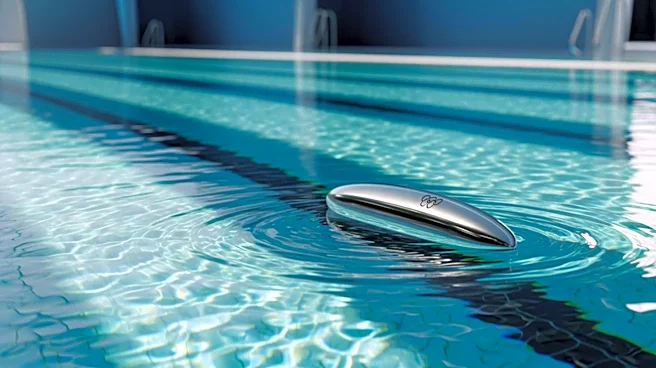







Competitive swimming has a rich history that dates back to the early 19th century. Over the years, it has evolved from a recreational activity to a highly organized sport with international competitions, including the Olympics. This article explores the key milestones in the development of competitive swimming and how it has become one of the most popular sports worldwide.
Early Beginnings and Formalization
Swimming as a competitive sport began to take shape in the early 1800s in England.
The first indoor swimming pool, St George's Baths, opened to the public in 1828, marking a significant step in the formalization of the sport. By 1837, the National Swimming Society was holding regular competitions in London, showcasing the growing interest in competitive swimming.
The sport's popularity continued to rise, and by 1880, the Amateur Swimming Association was formed, establishing a national governing body for the sport in England. This organization helped standardize rules and regulations, paving the way for more structured competitions. By the end of the 19th century, competitive swimming had spread to other European countries, each establishing their own swimming federations.
Olympic Inclusion and Global Expansion
Swimming made its debut in the modern Olympic Games in 1896, held in Athens. Initially, only men's events were included, but the sport quickly gained traction, leading to the inclusion of women's events in the 1912 Olympics in Stockholm. The introduction of swimming to the Olympics significantly boosted its popularity and encouraged the development of competitive swimming worldwide.
The formation of the world swimming association, FINA (Fédération Internationale de Natation), in 1908 further solidified swimming's status as a global sport. FINA played a crucial role in organizing international competitions and setting standardized rules, which helped unify the sport across different countries.
Modern Developments and Innovations
In the 20th century, competitive swimming saw numerous innovations and developments. The introduction of new swimming strokes, such as the butterfly in the 1930s, added variety to the sport and challenged athletes to master different techniques. The butterfly stroke was initially considered a variant of the breaststroke until it was recognized as a separate style in 1952.
Technological advancements also played a role in the evolution of competitive swimming. The development of more efficient swimwear, starting blocks, and pool designs helped swimmers achieve faster times and break records. These innovations, combined with improved training techniques, have contributed to the continuous improvement of performance in the sport.
Today, competitive swimming is a major component of the Summer Olympics, with events ranging from sprints to long-distance races. It remains a popular sport worldwide, attracting athletes of all ages and skill levels. The evolution of competitive swimming reflects the sport's enduring appeal and its ability to adapt and grow over time.