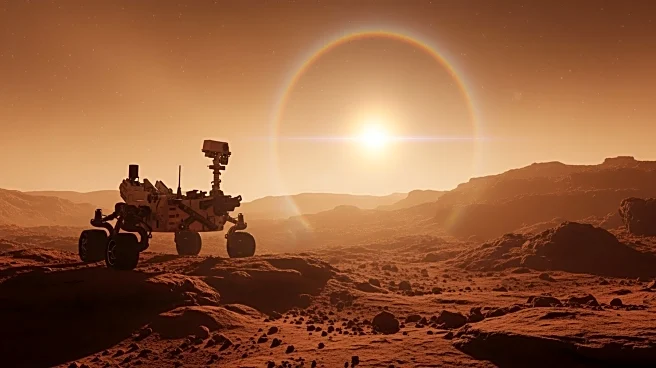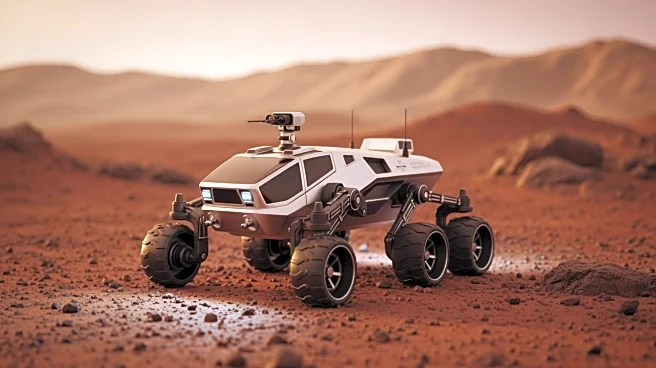

The Mars Exploration Rover (MER) mission, launched by NASA in 2003, was a groundbreaking endeavor that sent two robotic rovers, Spirit and Opportunity, to explore the Martian surface. Originally planned
to last 90 Martian days, the mission far exceeded expectations, with Spirit operating until 2010 and Opportunity until 2018. This mission not only provided invaluable data about Mars but also demonstrated the resilience and capability of robotic exploration.
Launch and Landing
The MER mission began with the launch of two rovers, Spirit and Opportunity, in mid-2003. Spirit, designated as MER-A, was launched on June 10, 2003, followed by Opportunity, MER-B, on July 7, 2003. Both rovers were launched from Cape Canaveral using Boeing Delta II rockets. The launch vehicles were prepared on adjacent pads, allowing for a close launch schedule. This strategic planning was crucial for the mission's success, as it ensured that both rovers could be deployed within their optimal launch windows.
Upon reaching Mars, Spirit and Opportunity landed in January 2004 at separate locations on the Martian surface. Spirit touched down in Gusev Crater, while Opportunity landed in Meridiani Planum. The landing sites were chosen based on their potential to reveal past water activity on Mars. The successful landing of both rovers marked the beginning of an extensive exploration mission that would yield significant scientific discoveries.
Scientific Objectives and Discoveries
The primary scientific objective of the MER mission was to search for and characterize a variety of rocks and soils that could provide clues to past water activity on Mars. The mission aimed to determine the distribution and composition of minerals, rocks, and soils surrounding the landing sites. By analyzing these materials, scientists hoped to uncover evidence of water-related processes such as precipitation, evaporation, and sedimentary cementation.
Both rovers were equipped with a suite of scientific instruments designed to achieve these objectives. They conducted detailed analyses of the Martian surface, identifying minerals that formed in the presence of water. Opportunity, for instance, discovered hematite spherules, nicknamed "blueberries," which suggested that liquid water once existed in Meridiani Planum. Spirit, on the other hand, found evidence of past hydrothermal activity in the Columbia Hills, indicating that water had once altered the region's geology.
Mission Extensions and Legacy
The MER mission was initially planned to last 90 Martian days, but both rovers continued to operate well beyond this timeframe. Spirit remained active until March 2010, while Opportunity continued its mission until June 2018. The longevity of the rovers allowed for multiple mission extensions, enabling them to explore additional sites and conduct further scientific investigations.
Throughout their extended missions, Spirit and Opportunity faced numerous challenges, including dust storms and mechanical issues. Despite these obstacles, the rovers continued to transmit valuable data back to Earth, significantly enhancing our understanding of Mars. The mission's success was recognized with the naming of two asteroids, 37452 Spirit and 39382 Opportunity, in honor of the rovers.
The MER mission set a new standard for robotic exploration, demonstrating the potential for long-term scientific research on other planets. The data collected by Spirit and Opportunity continues to inform current and future Mars missions, contributing to our ongoing quest to understand the Red Planet's history and its potential to support life.