






Rocket launchers have evolved significantly since their inception during World War II, becoming versatile tools in modern military operations. From anti-tank warfare to targeting personnel and structures, these weapons have adapted to meet the diverse needs of contemporary combat scenarios.
Multi-Purpose Weapon Systems
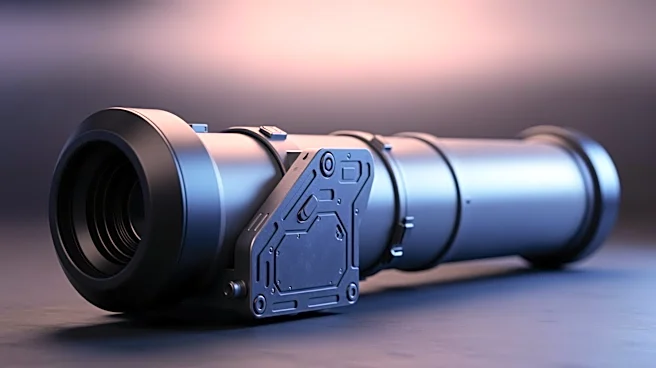
Modern rocket launchers are designed to fulfill multiple roles on the battlefield, thanks to advancements in technology and engineering. The RPG-7, for example,
is a widely used Soviet anti-tank weapon that can be equipped with various warheads to target different types of threats. Its versatility makes it a valuable asset for military forces around the world.
The RPG-7 can be loaded with high-explosive anti-tank (HEAT) warheads to penetrate armored vehicles, fragmentation warheads to target personnel, and thermobaric warheads for maximum impact against structures. This adaptability allows soldiers to respond effectively to a range of combat situations, enhancing their operational capabilities.
Adaptation to Urban and Asymmetric Warfare
As warfare has shifted towards urban and asymmetric environments, rocket launchers have adapted to meet these challenges. The M72 LAW, a lightweight, disposable rocket launcher, is particularly suited for urban combat, where mobility and ease of use are crucial. Its ability to target structures and lightly armored vehicles makes it an ideal choice for infantry units operating in complex terrains.
In asymmetric warfare, where conventional military tactics may not be effective, rocket launchers provide a means for smaller forces to engage larger, more heavily equipped adversaries. Their portability and ease of use make them accessible to insurgent groups and non-state actors, who often employ them in guerrilla tactics against conventional forces.
Technological Advancements
The development of guided rocket systems, such as the FGM-148 Javelin, represents a significant advancement in rocket launcher technology. These systems offer precision targeting capabilities, allowing soldiers to engage enemy armor with greater accuracy and effectiveness. The Javelin's guided rocket can track and hit targets from a distance, reducing the risk to the operator.
Technological innovations have also led to the creation of rocket pods for aircraft, enabling close air support missions with multiple unguided rockets. These pods enhance the firepower of attack helicopters and aircraft, providing additional support to ground forces in combat.
Rocket launchers continue to play a vital role in modern warfare, demonstrating their versatility and adaptability in various combat scenarios. As technology advances, these weapons will likely evolve further, maintaining their relevance in military operations worldwide.