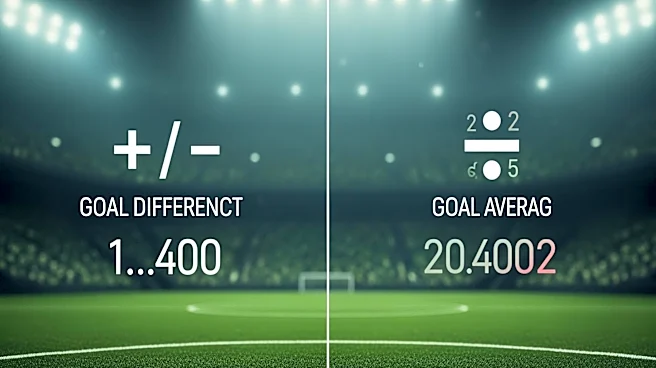








In the world of sports, particularly in league competitions, determining the ranking of teams that finish with equal points is crucial. Two primary methods have been used historically: goal difference and goal average. While both aim to break ties, they do so in different ways, each with its own implications for how the game is played.
Understanding Goal Difference
Goal difference is calculated by subtracting the number of goals conceded from the number of goals scored. This method
is straightforward and encourages teams to focus on both scoring and defending. A positive goal difference indicates that a team has scored more goals than it has conceded, which is generally seen as a sign of a strong team.
The adoption of goal difference as a tiebreaker was driven by the desire to promote more attacking play. By rewarding teams that score more goals, leagues hoped to create more exciting matches. This method has been widely adopted across various sports, including association football, ice hockey, and rugby union.
The Goal Average Approach
Before goal difference became the norm, goal average was the preferred method. This approach calculates the number of goals scored divided by the number of goals conceded. While it provides a ratio that reflects a team's performance, it has been criticized for encouraging defensive play. Teams could maintain a high goal average by focusing on not conceding goals rather than scoring more.
One of the main drawbacks of goal average is its complexity. Calculating a ratio can be less intuitive than simply subtracting goals conceded from goals scored. Additionally, if a team concedes no goals, the goal average becomes undefined due to division by zero, which can complicate rankings.
The Shift from Goal Average to Goal Difference
The transition from goal average to goal difference was largely motivated by the desire to encourage more dynamic and offensive play. By focusing on the net goals scored, teams are incentivized to attack more, leading to more engaging matches for fans.
Despite the shift, goal average is still used in some sports, such as Australian Rules Football, where it is referred to as "percentage." However, the trend has been towards goal difference, as it aligns better with the modern emphasis on attacking play.
In conclusion, while both goal difference and goal average serve the purpose of breaking ties in league competitions, goal difference has become the preferred method. Its simplicity and encouragement of offensive play make it a more attractive option for leagues aiming to provide exciting and competitive matches.