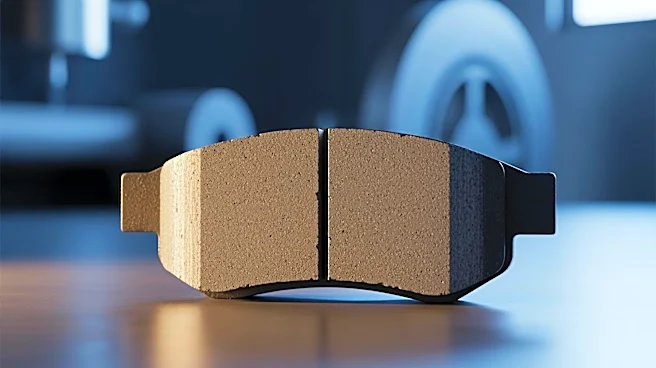




Brake pads are essential components in the braking systems of vehicles, responsible for converting kinetic energy into thermal energy through friction. This article delves into the mechanics of brake pads, explaining how they function within disc brakes to ensure safe and effective vehicle stopping.
The Mechanics of Brake Pads
Brake pads are integral to disc brake systems, which are commonly used in modern vehicles. Each disc brake consists of two brake pads positioned on either
side of a spinning rotor. When the driver applies the brakes, hydraulic pressure forces the caliper to squeeze the brake pads against the rotor. This action creates friction, which slows down the rotor and, consequently, the vehicle.
The friction generated by the brake pads not only slows the vehicle but also transfers small amounts of the pad's material onto the rotor. This process leaves a thin layer of friction material on the rotor, enhancing the grip between the pad and the rotor during subsequent braking. This interaction is crucial for effective braking performance, ensuring that the vehicle can stop safely and efficiently.
Types of Brake Pad Materials
Brake pads are made from various materials, each offering unique properties that affect performance and durability. The most common types include non-metallic, semi-metallic, fully metallic, and ceramic pads. Non-metallic pads are composed of synthetic substances and are gentle on rotors, but they tend to produce more dust and have a shorter lifespan.
Semi-metallic pads, on the other hand, contain a mix of synthetic materials and metal flakes. They are more durable and fade-resistant but can cause increased wear on rotors. Fully metallic pads, typically used in racing applications, are made entirely of metal and offer excellent durability but require more force to achieve effective braking. Ceramic pads provide a balance between durability and noise reduction, making them a popular choice for high-performance vehicles.
Maintenance and Replacement
Regular maintenance of brake pads is essential to ensure optimal braking performance. Most brake pads are equipped with wear indicators that alert drivers when replacement is necessary. These indicators can be visual, acoustical, or electrical, providing a clear signal when the pads have worn down to a critical level.
Replacing brake pads in pairs is crucial to maintain balanced braking performance. Uneven wear can lead to the vehicle pulling to one side during braking, compromising safety. By understanding the function and mechanics of brake pads, drivers can better appreciate their role in vehicle safety and ensure timely maintenance for reliable performance.