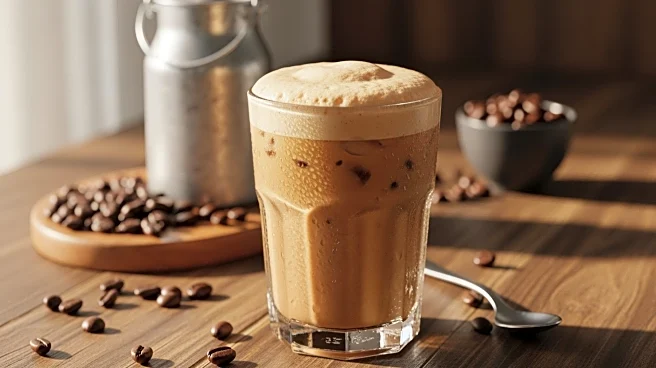




Iced coffee has become a staple in many cultures, and in Australia, Farmers Union Iced Coffee holds a special place. Launched in 1977, this flavored milk drink has grown from a local favorite in South Australia to a nationwide phenomenon. Its journey from a regional product to a national icon is a testament to its unique appeal and the strategic decisions made by its producers.
Launch and Initial Popularity
Farmers Union Iced Coffee was first introduced in 1977 by a cooperative
of South Australian dairy farmers. The drink quickly gained popularity in South Australia, thanks to its unique blend of coffee, glucose, and homogenized reduced-fat milk. Initially available in 600 mL and 375 mL cartons, the product's packaging has evolved over the years, with the 375 mL cartons being replaced by 300 mL bottles in 2019.
The drink's popularity soared, and by 2003, Australians were consuming over 22 million liters annually, making it the best-selling flavored milk drink in the country at the time. Its success was further cemented when major fast-food chains like McDonald's, KFC, and Hungry Jack's began offering it as part of their menus.
Expansion and Variations
As demand for Farmers Union Iced Coffee grew, the brand expanded its reach beyond South Australia to other states and territories. The drink's manufacturer changed hands several times, from the original cooperative to National Foods, and eventually to subsidiaries of the Japanese brewing company Kirin. Today, it is produced by Bega Dairy & Drinks.
In response to consumer demand, the company introduced new flavors in 2006, including Farmers Union Strong Iced Coffee, which features a stronger coffee blend, and Farmers Union Light Iced Coffee, which has no added sugar. However, the Light Iced Coffee did not gain much traction, leading to the introduction of Farmers Union Iced Coffee One in 2011, which promised "100% taste, 1% fat, and no added sugar."
Cultural Impact and Recognition
Farmers Union Iced Coffee has become more than just a beverage; it is a cultural icon in Australia, particularly in South Australia. Its commercials, often featuring humorous and relatable scenarios, have contributed to its high profile. The drink's popularity is such that even car manufacturers have designed cup holders to accommodate its cartons.
The brand's influence extends beyond the beverage industry, as it has been featured in popular culture, including the 2023 film "Emotion Is Dead." This recognition underscores the drink's status as a beloved Australian staple, reflecting its deep-rooted connection to the country's culture and lifestyle.