


The Syrian civil war, which began in 2011, has been a complex and devastating conflict that has reshaped the region and impacted millions of lives. This article provides a chronological overview of the key events and phases of the war, highlighting the major developments and turning points that have defined this prolonged struggle.
The Beginnings: 2011-2012
The Syrian civil war originated from the Syrian revolution in March 2011, when widespread discontent with the Ba'athist
regime led by Bashar al-Assad sparked large-scale protests and pro-democracy rallies across Syria. These protests were part of the broader Arab Spring movement. The Assad regime responded with lethal force, leading to defections and the formation of armed opposition groups. By 2012, the civilian uprising had descended into a full-blown civil war.
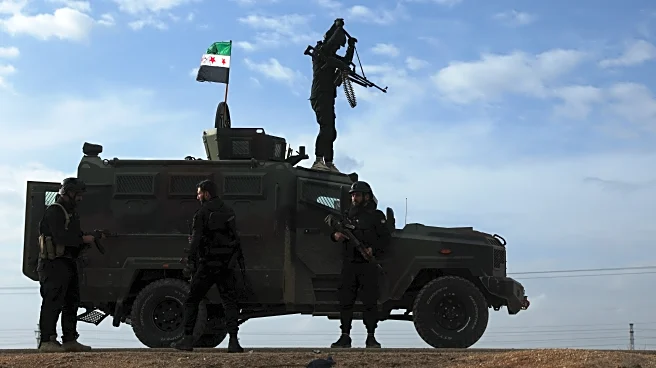
During this period, the Syrian opposition began to organize, forming groups such as the Free Syrian Army. Anti-Assad forces received support from countries like Qatar, Turkey, and the United States, while pro-Assad forces were backed by Iran, Russia, and Hezbollah. The conflict intensified as chemical weapons were used, predominantly by Syrian government forces, leading to international condemnation.
Escalation and International Involvement: 2013-2017
The war escalated significantly between 2013 and 2017, with foreign interventions playing a crucial role. Iran launched a military intervention in support of the Assad government in 2013, followed by Russia in 2015. These interventions helped Assad regain control over key territories, including Aleppo, which was recaptured in December 2016 after a prolonged battle.
Meanwhile, the Islamic State (IS) seized control over parts of Eastern Syria and Western Iraq, prompting a United States-led coalition to launch an aerial bombing campaign against IS. Turkey also intervened in northern Syria, responding to the creation of the Kurdish-led Autonomous Administration of North and East Syria (Rojava).
Stalemate and Resolution: 2018-2024
By 2018, the conflict had largely settled into a stalemate, with Assad's government controlling about two-thirds of the country. Despite regular flare-ups, large-scale fighting subsided, and efforts to broker a political settlement continued. However, the war's brutality and the humanitarian crisis persisted, with millions displaced and widespread poverty.
In late 2024, a coalition of opposition groups launched a major offensive, capturing key cities and leading to the fall of the Assad regime. Bashar al-Assad fled to Moscow, marking the end of over 60 years of Ba'athist rule. The Syrian Salvation Government took over, signaling a new chapter in Syria's history.