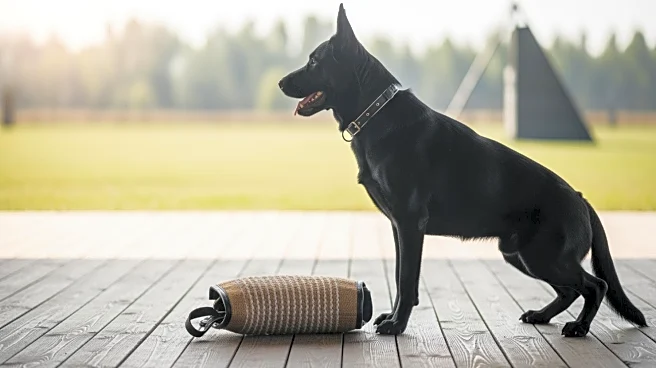


Schutzhund, a German term meaning "protection dog," is a dog sport that evaluates a dog's tracking, obedience, and protection skills. Originally developed in Germany for German Shepherds, Schutzhund has become a model for training and assessing working dogs of various breeds. This sport is not only a test of a dog's abilities but also a tool for breeders to identify dogs with the right traits for demanding jobs.
The Origins and Purpose of Schutzhund
Schutzhund was developed in the early
1900s as a suitability test for German Shepherds. The goal was to ensure that these dogs retained their working abilities, which were essential for tasks such as police work and search and rescue. Over time, Schutzhund became a standard for evaluating the character and capabilities of working dogs, influencing breeding decisions to maintain strong working traits.
Today, Schutzhund is open to all breeds, although it remains dominated by German Shepherds and Belgian Malinois. The sport tests a dog's desire to work, courage, intelligence, and trainability, among other traits. These characteristics are crucial for dogs involved in police work, specific odor detection, and other specialized tasks.
The Structure of Schutzhund Trials
Schutzhund trials consist of three phases: tracking, obedience, and protection. Each phase is designed to test different aspects of a dog's abilities. In the tracking phase, dogs follow a scent trail laid by a track layer, indicating any articles they find along the way. This phase assesses the dog's scenting ability, mental soundness, and endurance.
The obedience phase takes place in a large field, where dogs perform various exercises such as heeling, recalls, and retrieves. This phase tests the dog's accuracy and enthusiasm, with judges looking for a strong bond between the dog and the handler. The protection phase involves a helper who tests the dog's courage and control. The dog must protect itself and its handler while obeying commands, demonstrating both bravery and discipline.
The Impact of Schutzhund on Dog Breeding
Schutzhund plays a significant role in dog breeding, particularly for working breeds. In Germany, German Shepherds must pass at least the level one Schutzhund trial to be eligible for breeding. This requirement ensures that only dogs with the desired working traits contribute to the gene pool, maintaining the breed's capabilities over generations.
The sport also provides a platform for handlers to showcase their dogs' abilities and for breeders to evaluate potential breeding stock. By participating in Schutzhund, breeders can make informed decisions about which dogs to use in their breeding programs, ultimately preserving the working qualities of their chosen breeds.
In conclusion, Schutzhund is a comprehensive test of a dog's working abilities, offering valuable insights for breeders and handlers alike. Its rigorous trials ensure that only the most capable dogs are selected for breeding, helping to maintain the integrity and functionality of working breeds.