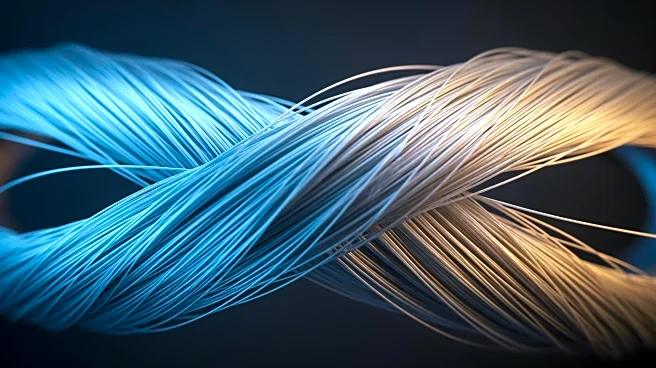




Microfiber, a synthetic fiber known for its fine threads, has become a staple in various industries due to its unique properties. This article explores the historical development of microfiber, tracing its journey from initial experiments to its widespread use today. Understanding this evolution provides insight into how microfiber has become integral to cleaning, textiles, and more.
Early Developments in Microfiber Technology
The story of microfiber begins in the late 1950s with the production
of ultra-fine fibers. These early fibers were created using melt-blown spinning and flash spinning techniques. Initially, the fibers produced were only fine staples of random length, which limited their applications. However, the potential for these fibers was recognized, leading to further experimentation.
In the 1960s, significant advancements were made in Japan by Miyoshi Okamoto, a scientist at Toray Industries. Okamoto's work, along with that of Toyohiko Hikota, led to the development of continuous filament ultra-fine fibers. This breakthrough paved the way for industrial applications, including the creation of Ultrasuede, one of the first successful synthetic microfibers, which entered the market in the 1970s.
Expansion and Popularization
Microfiber's use in the textile industry expanded significantly after its initial introduction. By the early 1990s, microfiber had gained popularity in Sweden and began to see success across Europe. The unique properties of microfiber, such as its ability to trap dust and reduce bacteria, made it an attractive option for various applications.
The textile industry was quick to adopt microfiber for its versatility. It was used to create a range of products, from clothing and upholstery to industrial filters and cleaning products. The ability to produce microfiber in different shapes, sizes, and combinations allowed manufacturers to tailor its properties for specific uses, such as softness, toughness, and water repellence.
Modern Applications and Impact
Today, microfiber is widely used in cleaning products due to its effectiveness in reducing bacteria and absorbing oils without leaving residue. Its electrostatic properties make it ideal for attracting dust, and it is commonly used in cloths for cleaning sensitive surfaces like lenses and screens.
In addition to cleaning, microfiber is used in apparel, particularly athletic wear, due to its moisture-wicking properties. It is also a popular choice for accessories traditionally made from leather, such as wallets and handbags, because of its durability and water repellence. The versatility and effectiveness of microfiber continue to drive its popularity across various industries.
Microfiber's journey from a novel synthetic fiber to a widely used material highlights the importance of innovation in textile technology. Its development and expansion demonstrate how scientific advancements can lead to practical applications that enhance everyday life.