





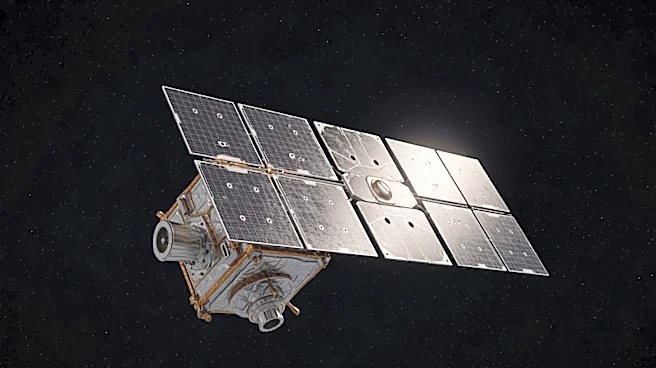



The Mariner 5 mission to Venus was not only a scientific endeavor but also a showcase of technical innovation. As a spacecraft originally designed as a backup for a Mars mission, Mariner 5 underwent significant modifications to adapt to its new target, Venus. These changes highlight the ingenuity and adaptability of NASA's engineering teams during the 1960s.
Adapting for a New Mission
Mariner 5 was initially constructed as a backup to Mariner 4, which had successfully completed
a mission to Mars. However, after Mariner 4's success, the decision was made to repurpose Mariner 5 for a Venus flyby. This required several technical modifications to the spacecraft's design and instrumentation.
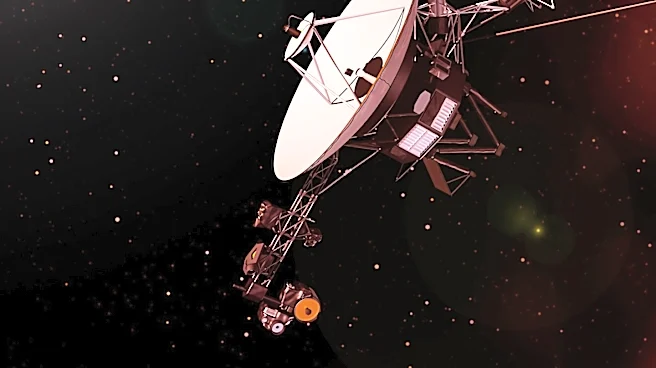
One of the primary changes was the orientation of the spacecraft. Unlike Mariner 4, which faced the Sun, Mariner 5 needed to face away from the Sun to keep its high-gain antenna directed at Earth. This necessitated reversing the solar panels to ensure they remained sun-facing, allowing for continuous power generation. Additionally, the proximity of the mission to the Sun meant that fewer solar cells were needed, leading to a reduction in solar panel size to save mass.
Instrumentation and Communication
Mariner 5's instrumentation was tailored to its new mission objectives. The spacecraft retained several instruments from Mariner 4, including the helium-vector magnetometer and solar plasma probe, but omitted others such as the TV camera and cosmic ray detector. New equipment was added, including an ultraviolet photometer and dual-frequency receiver antennas, to enhance its ability to study Venus's atmosphere and magnetic fields.
The high-gain antenna also required modifications. Unlike Mariner 4, where the antenna was inclined at a simple angle, Mariner 5's trajectory required a more complex skewed angle. This antenna included a single-use mechanism to adjust its angle as part of the radio occultation experiment, a critical component of the mission's scientific goals.
Legacy of Innovation
The technical innovations of Mariner 5 set a precedent for future space missions. The ability to adapt a spacecraft for a different mission demonstrated the flexibility and resourcefulness of NASA's engineering teams. The modifications made to Mariner 5 allowed it to successfully complete its mission objectives, providing valuable data on Venus's atmosphere and magnetic fields.
Mariner 5's success underscored the importance of technical adaptability in space exploration. The mission's innovations continue to influence the design and execution of interplanetary missions, highlighting the enduring legacy of the Mariner program.