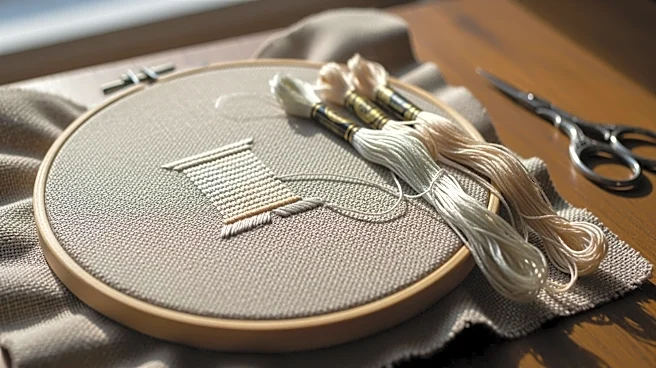







English embroidery has a rich and storied history, spanning from the Anglo-Saxon era to the present day. Known for its intricate designs and skilled craftsmanship, English embroidery has evolved through various styles and techniques, reflecting the cultural and artistic trends of each period.
Medieval Origins and Opus Anglicanum
The earliest examples of English embroidery date back to the Anglo-Saxon period, with notable pieces like those found in the coffin of St. Cuthbert. These works
were characterized by the use of gold and silk threads, creating intricate designs that were highly valued across Europe. The style known as Opus Anglicanum, or "English work," emerged during the 12th to 14th centuries. This style was renowned for its exquisite craftsmanship and was often used for ecclesiastical and secular purposes.
Opus Anglicanum was typically worked on linen or dark silks, featuring continuous scrolls and spirals, as well as figures of kings and saints. The Vatican inventory of 1295 recorded over 100 pieces of English work, highlighting its widespread acclaim. Notable surviving examples include the Syon Cope and the Butler-Bowdon Cope, both housed in the Victoria and Albert Museum.
Renaissance to Restoration: A Shift in Focus
The Protestant Reformation in the 16th century marked a shift in English embroidery, with a focus on clothing and household furnishings. The Elizabethan and Jacobean eras saw a flourishing of domestic embroidery, with styles like blackwork and crewel work gaining popularity. Blackwork, characterized by monochrome designs, was often used to embellish fine linen shirts and accessories.
During this period, embroidery became a popular pastime for skilled amateurs, particularly women. The rise of pattern books and professional pattern-drawers facilitated the creation of intricate designs, further enhancing the art form's appeal. The introduction of the formal sampler as a record of stitchers' skills also became prevalent during this time.
Modern Developments and Legacy
In the 19th century, the Arts and Crafts Movement sought to revive the artistic styles of medieval embroidery. This led to the development of art needlework, which emphasized expressive and creative designs. Organizations like the Royal School of Needlework, founded in 1872, played a crucial role in preserving and promoting the craft.
Today, English embroidery continues to be celebrated for its historical significance and artistic beauty. Institutions like the Worshipful Company of Broderers and the Embroiderers' Guild remain active in supporting the craft, ensuring that the rich legacy of English embroidery endures for future generations.