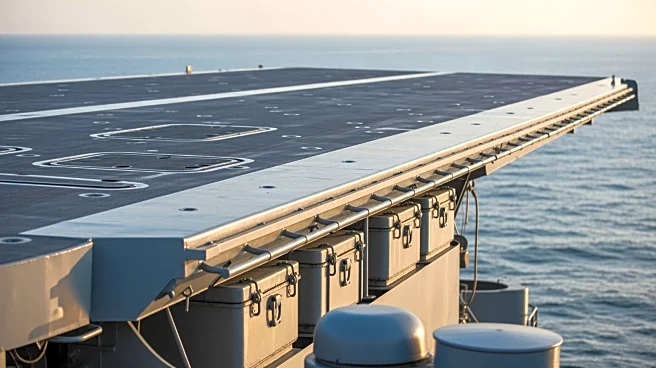




The USS Langley holds a significant place in naval history as the first aircraft carrier of the United States Navy. Originally built as a collier named USS Jupiter, the ship underwent a remarkable transformation in 1920, marking a pivotal moment in naval aviation. This article delves into the conversion process of USS Langley, highlighting the technological advancements and strategic decisions that led to its new role as an aircraft carrier.
The Origins of USS Langley
USS Langley
began its life as USS Jupiter, a collier designed to transport coal for the U.S. Navy. Laid down in 1911 at the Mare Island Naval Shipyard, Jupiter was launched in 1912 and commissioned in 1913. It was notable for being the first turbo-electric-powered ship in the U.S. Navy, featuring an innovative electric drive system designed by William Le Roy Emmet. This system consisted of two electric motors connected to propeller shafts, powered by a Curtis turbine and alternator set, allowing the ship to reach speeds of 14 knots.
During its service as a collier, Jupiter played a crucial role in supporting naval operations, including transporting a naval aviation detachment to Europe during World War I. The ship's capabilities and performance laid the groundwork for its eventual conversion into an aircraft carrier, a decision influenced by the changing tides of naval warfare and technological advancements.
Conversion to an Aircraft Carrier
The conversion of USS Jupiter into USS Langley, the first U.S. Navy aircraft carrier, was authorized in 1919. The transformation took place at the Norfolk Naval Shipyard in Virginia, where the ship was renamed Langley in honor of Samuel Pierpont Langley, an aviation pioneer. The conversion process involved significant modifications, including the installation of a full-length wooden flight deck capable of launching and recovering aircraft.
Langley was designed to carry up to 34 airplanes, including single-seaters, two-seaters, and torpedo-dropping aircraft. The ship's recommissioning in 1922 marked the beginning of a new era in naval aviation, as Langley conducted experiments in seaborne aviation under the command of Commander Kenneth Whiting. These experiments paved the way for future aircraft carriers and established Langley as a pioneer in naval aviation.
Impact on Naval Aviation
USS Langley's conversion into an aircraft carrier had a profound impact on naval aviation, setting the stage for the development of future carriers. The ship was the site of several significant milestones, including the first plane launched from its deck and the first landing on a carrier. These achievements demonstrated the feasibility and strategic value of aircraft carriers, influencing naval tactics and operations.
Langley's success as an experimental carrier led to the conversion of other ships, such as the Lexington and Saratoga, into aircraft carriers. The ship's legacy continued as it was later converted into a seaplane tender, serving in World War II before being scuttled in 1942. USS Langley's transformation from a collier to an aircraft carrier remains a testament to the innovative spirit and strategic foresight of the U.S. Navy.