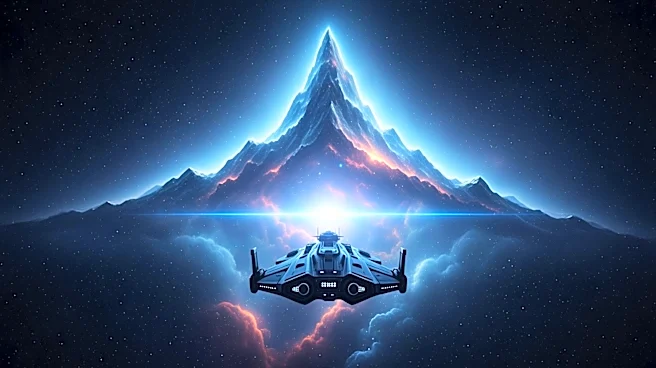








Star Trek V: The Final Frontier, directed by William Shatner, is a 1989 science fiction film that continues the adventures of Captain Kirk and the crew of the USS Enterprise. This article explores the film's plot and the themes it addresses, providing insight into its narrative structure and philosophical undertones.
The Storyline
The film opens with the crew of the newly commissioned USS Enterprise enjoying a well-deserved rest after their first test voyage. Captain
James T. Kirk, along with his first officer Spock and ship's doctor Leonard McCoy, is camping in Yosemite National Park. However, their respite is short-lived as they are called back to duty to deal with a crisis on Nimbus III, a planet in the Neutral Zone.
On Nimbus III, a renegade Vulcan named Sybok has taken control, capturing the consuls of the Federation, the Klingon Empire, and the Romulan Star Empire. Sybok, who is revealed to be Spock's half-brother, seeks to find God at the center of the galaxy, believing that he can achieve this by commandeering a starship. The Enterprise is dispatched to resolve the situation, despite the ship's numerous technical issues.
Themes of Faith and Redemption
One of the central themes of Star Trek V: The Final Frontier is the exploration of faith and the search for meaning. Sybok's quest to find God represents a deeper philosophical inquiry into the nature of belief and the human desire for answers to existential questions. The film challenges the characters, particularly Kirk and Spock, to confront their own beliefs and the limits of their understanding.
The theme of redemption is also prevalent throughout the film. Sybok's journey is not just a physical one but also a spiritual quest for redemption. His actions force the crew of the Enterprise to examine their own pasts and the pain they carry. The film suggests that redemption is possible through understanding and confronting one's inner struggles.
The Interplay of Logic and Emotion
Star Trek V: The Final Frontier also delves into the interplay between logic and emotion, a recurring theme in the Star Trek universe. Spock, as a Vulcan, embodies the struggle between these two forces. His relationship with Sybok highlights the tension between adhering to Vulcan logic and embracing human emotions.
The film uses this dynamic to explore the complexities of human nature and the importance of balance. It suggests that both logic and emotion have their place in decision-making and that understanding this balance is key to personal growth and harmony.
In conclusion, Star Trek V: The Final Frontier offers a rich narrative that goes beyond its science fiction setting to address universal themes of faith, redemption, and the human condition. Through its storyline and character development, the film invites viewers to reflect on their own beliefs and the nature of their existence.