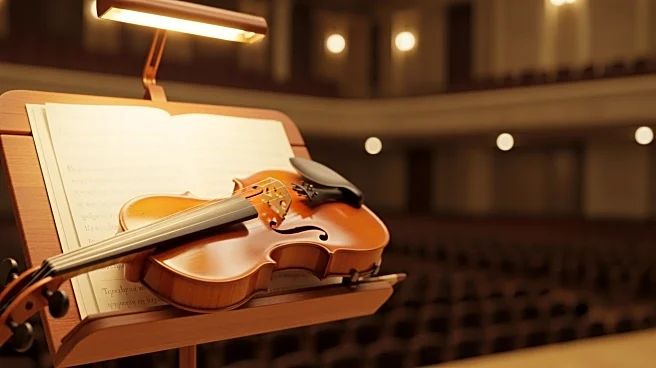



The concertmaster holds a pivotal position in an orchestra, serving as the principal first violinist and a key leader alongside the conductor. This role is crucial for maintaining the cohesion and quality of the orchestra's performance. The concertmaster's responsibilities extend beyond playing the violin; they involve leadership, coordination, and communication within the ensemble.
Leadership and Coordination
In an orchestra, the concertmaster is the leader of the first violin
section and often the most skilled musician in the group. This position requires the ability to learn music quickly and accurately, as well as to lead the string section through playing and bow gestures. The concertmaster sits to the conductor's left, in what is known as the "first chair," and is responsible for making decisions regarding bowing and other technical details of violin playing for the violins and sometimes all string players.
The concertmaster also leads the orchestra in tuning before concerts and rehearsals. This is not merely a formality; if the concertmaster believes a section is not adequately tuned, they will signal the oboe player to play another "A." This ensures that the orchestra is in harmony before the performance begins. Additionally, the concertmaster participates in auditions for important musicians, such as principal players, ensuring that the orchestra maintains a high standard of musicianship.
Communication with the Conductor
The concertmaster acts as a conduit between the conductor and the orchestra, translating the conductor's instructions into specific technical language for the strings. This requires a deep understanding of historical playing styles and the mechanics of string playing. Some conductors prefer to speak broadly and defer to the concertmaster on technical matters, respecting the musicians' expertise.
The concertmaster also provides stability and leadership, especially when the orchestra works with different conductors throughout a season. While the conductor gives the impetus for the orchestra to play, the musicians often follow the concertmaster's bow as their cue to play, ensuring precision and unity in the performance.
Maintaining Decorum and Tradition
Beyond technical duties, the concertmaster helps maintain decorum during rehearsals by setting a personal example and ensuring cooperation among orchestra members. In American and British orchestras, the concertmaster typically walks onstage individually before the conductor, receiving applause as a representative of the orchestra. This tradition highlights the concertmaster's role as a leader and symbol of the orchestra's unity and excellence.
In summary, the concertmaster's role is multifaceted, involving leadership, technical expertise, and communication. This position is essential for the smooth operation and high-quality performance of an orchestra, making the concertmaster a vital figure in the world of classical music.