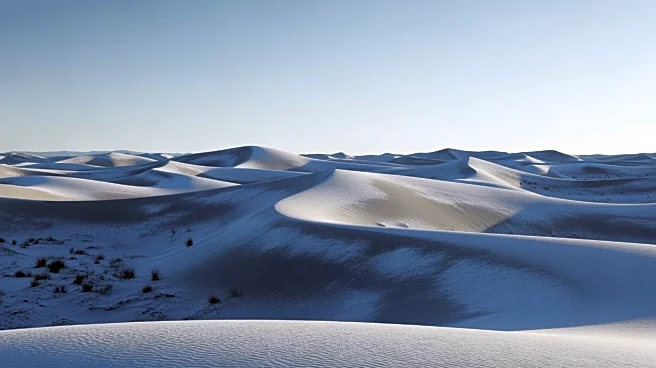




The Köppen climate classification is a widely used system for categorizing the world's climates based on temperature and precipitation patterns. Within this system, cold desert climates are designated as BWk. This article explores how cold desert climates fit into the Köppen classification and what distinguishes them from other climate types.
The Köppen Climate Classification System
Developed by Wladimir Köppen, the Köppen climate classification system divides Earth's climates into five main groups: tropical, arid, temperate, continental, and polar. Each group is further divided based on seasonal precipitation and temperature patterns. The arid group, designated as B, includes both desert (BW) and semi-arid (BS) climates.Cold desert climates fall under the BW category, specifically labeled as BWk. The 'k' indicates a cold arid
climate, characterized by mean annual temperatures below 18°C (64.4°F). This is in contrast to hot desert climates (BWh), where mean annual temperatures exceed 18°C. The classification helps in understanding the climatic conditions that define these regions and their impact on the environment.
Defining Features of Cold Desert Climates
Cold desert climates are distinguished by their dry conditions and significant temperature variations between seasons. These regions experience hot or warm summers, but not as extreme as those in hot desert climates. Winters are cold and dry, with snow being a rare occurrence. The dry air contributes to large temperature differences between day and night.Precipitation in cold desert climates is minimal, often less than 200 millimeters annually. These areas are typically found at higher altitudes than hot desert climates, which contributes to their cooler temperatures. The rain shadow effect, where high mountains block moisture-laden winds, is a common feature that restricts precipitation in these regions.
Examples of Cold Desert Climates
Cold desert climates are found in various parts of the world, often in temperate zones between the 30s and 40s latitudes. Notable examples include the Gobi Desert in northern China and Mongolia, the Atacama Desert in South America, and the Patagonian Desert in Argentina. In North America, cold desert climates occur in the Great Basin Desert, the Bighorn Basin in Wyoming, and the Columbia Plateau in eastern Washington and Oregon.Understanding the Köppen classification of cold desert climates provides valuable insights into the environmental conditions and challenges faced by these regions. It highlights the diversity of Earth's climates and the adaptations required for life to thrive in such extreme environments.