




Central Stadium in Yekaterinburg, Russia, has a rich history that reflects its evolution as a premier sports venue. From its early days as a velodrome to its role in hosting international events, the stadium has undergone significant transformations. This article explores the historical milestones that have shaped Central Stadium into the iconic venue it is today.
Early Beginnings and Development
The site of Central Stadium has been associated with sports since the early 20th century.
In 1900, a velodrome sponsored by merchant Kamaletdin Agafurov was established on the outskirts of Yekaterinburg. This early sports facility laid the groundwork for future developments. By 1928, the Regional Stadium was built, followed by the stadium "Metallurg of the East" in 1936.
In 1957, the current Central Stadium was constructed, replacing the previous structures. The new stadium was built to comply with fire safety regulations and quickly gained recognition as one of the top sports facilities in the Soviet Union. It became a hub for various sports and entertainment events, hosting thousands of spectators over the years.
Notable Events and Achievements
Central Stadium gained international prominence in the late 1950s and 1960s as a key venue for speed skating. It hosted the World Allround Speed Skating Championships for Women in 1959 and several USSR championships, where multiple world records were set. The stadium also hosted matches between top national speed skating teams, including the Soviet Union, Norway, Sweden, and Finland.
In addition to speed skating, Central Stadium was the site of the Spartakiad of the Peoples of the USSR in 1962, 1966, 1974, and 1978. These events, which were contemporaneously USSR championships, further solidified the stadium's reputation as a premier sports venue. The stadium continued to host various Russian and international competitions, attracting athletes and fans from around the world.
Modernization and Future Prospects
In the 21st century, Central Stadium underwent significant renovations to meet modern standards. In 2004, it became a public company, and by 2010, it was partially owned by the Sverdlovsk Oblast Ministry of Assets, the Administration of City Ekaterinburg, and JSC "Sinara Group." These changes facilitated further development and modernization of the stadium.
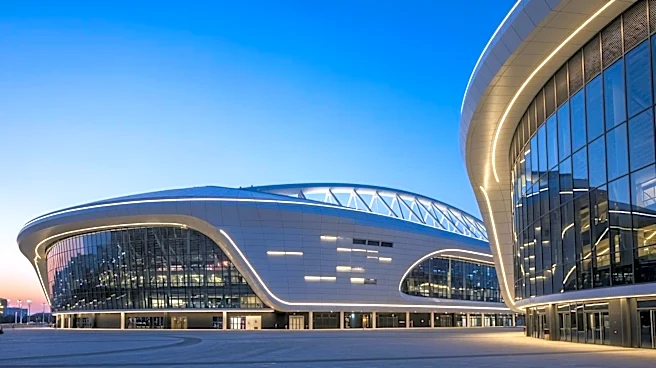
The most notable renovation occurred in preparation for the 2018 FIFA World Cup. The stadium's capacity was increased to over 35,000 spectators, with temporary stands erected to meet FIFA's requirements. These changes ensured that Central Stadium could host international events while preserving its historical façade.
Central Stadium's rich history and ongoing modernization efforts position it as a key venue for future sports and entertainment events. Its ability to adapt and evolve over the years highlights its significance in the world of sports, ensuring its continued relevance for generations to come.