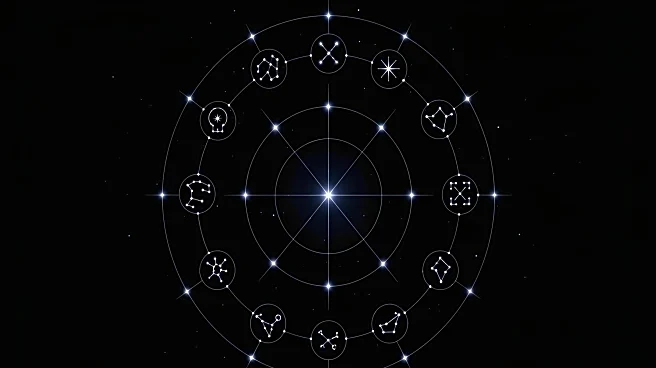




The zodiac is more than just a series of astrological signs; it is a fundamental part of the celestial coordinate system used in astronomy. This belt-shaped region of the sky extends approximately 8° north and south of the ecliptic, the apparent path of the Sun across the celestial sphere over the course of the year. Within this zodiac belt, the Moon and the brightest planets appear along their orbital planes. Understanding the zodiac's role in astronomy provides
insight into how ancient civilizations mapped the heavens.
The Structure of the Zodiac
The zodiac is divided into 12 equal parts, known as signs, each occupying 30° of celestial longitude. These signs correspond to the modern astronomical constellations: Aries, Taurus, Gemini, Cancer, Leo, Virgo, Libra, Scorpio, Sagittarius, Capricorn, Aquarius, and Pisces. This division into 12 parts originated with Babylonian astronomy during the 1st millennium BC. The Babylonians used this system to create a celestial coordinate system, which was later communicated into Greek astronomy and the developing Hindu zodiac.
The zodiac forms a celestial coordinate system, specifically an ecliptic coordinate system, which takes the ecliptic as the origin of latitude and the Sun's position at the vernal equinox as the origin of longitude. This system is still used in modern astronomy for tracking Solar System objects, highlighting its enduring significance.
Historical Development of the Zodiac
The concept of the zodiac has its roots in Babylonian astronomy, where it was used to track the movement of celestial bodies. The Babylonians divided the ecliptic into 12 equal signs, each containing 30° of celestial longitude, creating the first known celestial coordinate system. This system was introduced between 409 and 398 BC, during Persian rule, and was likely developed within a few years of 401 BC.
The zodiac was later adopted by Greek astronomers, who incorporated it into their own astronomical practices. The Greeks, particularly Ptolemy, rationalized the planets, Houses, and signs of the zodiac, setting down their functions in a way that has changed little to the present day. This historical development underscores the zodiac's importance as a tool for understanding the cosmos.
The Zodiac in Modern Astronomy
Today, the zodiac remains a crucial part of the ecliptic coordinate system used in astronomy. It defines a belt of space extending 8° or 9° in celestial latitude to the north and south of the ecliptic, within which the orbits of the Moon and the principal planets remain. This narrow band is due to the slight inclination of most of the Sun's planets to the Earth's orbital plane.
The zodiac's role in modern astronomy is not just historical; it continues to be a practical tool for astronomers. By providing a framework for measuring celestial longitude, the zodiac helps astronomers track the movement of celestial bodies, making it an essential component of the study of the heavens.