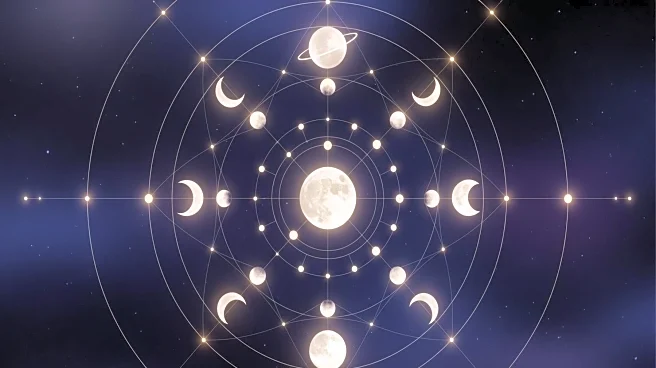




Celestial bodies have long held a place of reverence in the religious practices of ancient cultures. From the sun and moon to the stars and planets, these heavenly entities were often seen as divine and integral to the spiritual lives of early civilizations. This article delves into how different ancient cultures incorporated celestial bodies into their religious practices and the significance they held.
The Sun and Moon as Deities
In many ancient cultures, the sun and moon were
not just celestial objects but were revered as powerful deities. The sun, often associated with life and vitality, was worshipped as a god in various civilizations. In Ancient Egypt, the sun god Ra was one of the most important deities, symbolizing creation and life. Similarly, in other cultures, the sun was seen as a source of power and authority, often linked to kingship and divine rule.
The moon, with its changing phases, was also a significant religious symbol. It was often associated with femininity, fertility, and the passage of time. In some cultures, the moon was seen as a goddess, embodying the cyclical nature of life and the universe. The worship of the moon was not only a spiritual practice but also a way to mark time and agricultural cycles, which were crucial for survival.
Stars and Constellations in Religious Symbolism
Stars and constellations played a crucial role in the religious symbolism of ancient cultures. They were often seen as representations of gods or as guides for human actions. In northern Europe, ancient peoples depicted star constellations on amulets and stone walls, indicating their importance in religious rituals. These constellations were believed to hold power and influence over human affairs.
For the Aztecs, the northern stars were associated with the god Tezcatlipoca, a deity linked to darkness and the underworld. In China, the North Star was revered as a deity, with a shrine dedicated to its worship in Peking. The positions of stars were also used for timekeeping, helping ancient peoples to track the seasons and plan agricultural activities.
The Practical and Spiritual Significance
The worship of celestial bodies in ancient religions was not only spiritual but also practical. As agriculture developed, the need to keep accurate time led to more careful tracking of the positions of the sun, moon, and planets. This tracking was essential for predicting seasonal changes and ensuring successful harvests.
The deification of celestial bodies reflects the deep connection between ancient peoples and the natural world. By venerating these heavenly entities, they sought to understand and influence the forces that governed their lives. This interplay between the spiritual and practical aspects of celestial worship highlights the complexity and richness of ancient religious practices.