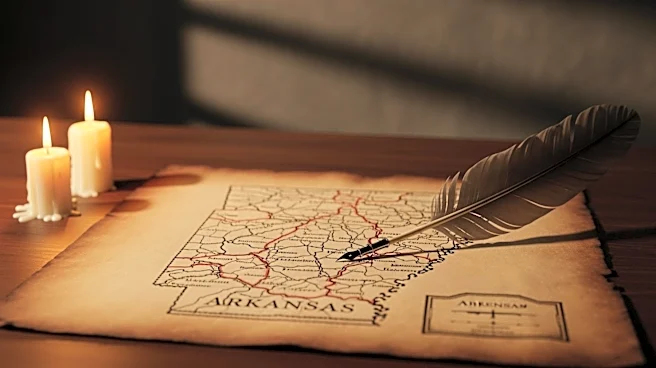







Governor Henry M. Rector played a pivotal role in Arkansas' decision to secede from the Union in 1861. His actions and rhetoric during this tumultuous period were instrumental in shaping the state's path toward joining the Confederacy. Rector's leadership, marked by his support for secession and his handling of key events, left a lasting impact on Arkansas' history.
Rector's Early Political Career and Rise to Governorship
Henry M. Rector's political career was deeply intertwined with the influential Conway-Johnson
family, known as "The Family," which dominated Arkansas politics. Despite his connections, Rector positioned himself as an outsider candidate in the 1860 gubernatorial election, capitalizing on anti-Family sentiment. His campaign portrayed him as a friend to the common man, despite his status as a wealthy slaveowner.
Rector's victory in the gubernatorial race came at a critical time, just as Abraham Lincoln's election to the presidency heightened tensions between the North and South. As governor, Rector immediately called for secession, aligning himself with the growing secessionist movement in the state.
The Arsenal Crisis and Rector's Influence
One of the defining moments of Rector's governorship was the Little Rock Arsenal crisis in February 1861. As rumors spread that the Federal Government intended to reinforce the arsenal, secessionist forces called for its seizure. While Rector did not officially endorse the action, he expressed tacit support for the militia's efforts, stating that he would interpose his official position on behalf of the people.
Rector's handling of the arsenal crisis demonstrated his willingness to support secessionist actions, even as the state had not yet officially seceded. His leadership during this period was marked by a delicate balance between supporting secessionist sentiment and avoiding direct confrontation with federal forces.
Rector's Legacy and the Final Push to Secession
Governor Rector's influence extended beyond the arsenal crisis. His refusal to provide troops for the Union cause following the Confederate attack on Fort Sumter in April 1861 further solidified Arkansas' path toward secession. Rector's actions, including the seizure of the Federal Arsenal at Fort Smith, were pivotal in shifting public opinion in favor of secession.
On May 6, 1861, the Arkansas Secession Convention reconvened and voted overwhelmingly to secede from the Union. Rector's leadership and rhetoric had played a significant role in this decision. Despite his initial popularity, Rector's aggressive stance during the secession crisis eventually led to his political downfall, as he lost support from both the public and political elites. Nevertheless, his impact on Arkansas' history during this critical period remains undeniable.