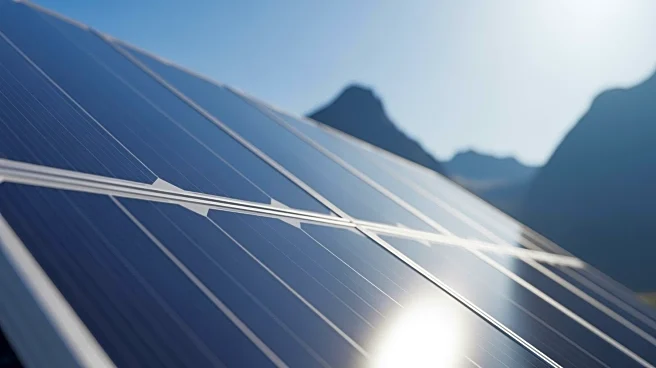




The National Laboratory of the Rockies, formerly known as the National Renewable Energy Laboratory (NREL), has been a leader in photovoltaic (PV) research, driving advancements in solar energy technology. Located in Golden, Colorado, the laboratory's efforts in PV research aim to reduce the nation's reliance on fossil fuels by improving the efficiency and cost-effectiveness of solar power. This article delves into the laboratory's PV research initiatives
and their impact on the solar energy landscape.
The National Center for Photovoltaics
At the heart of the laboratory's PV research is the National Center for Photovoltaics (NCPV). The NCPV plays a crucial role in supporting the Department of Energy's SunShot Initiative, which seeks to make solar power cost-competitive with other energy sources. The center collaborates with researchers across the country, including the Quantum Energy and Sustainable Solar Technologies (QESST) Center and the Bay Area PV Consortium.
The NCPV's research focuses on several key areas, including the physical properties of PV panels, performance and reliability, and junction formation. By exploring these areas, the laboratory aims to surpass current technologies in efficiency and cost-competitiveness, ultimately achieving the goal of generating electricity at $0.06/kWh for grid-tied PV systems.
Collaborative Research and Development
The laboratory's PV research is bolstered by its collaborative efforts with industry partners and academic institutions. The Thin-Film Partnership Program, for example, coordinates national research teams to explore various aspects of thin-film PV technology. This includes research on amorphous silicon, copper indium diselenide, and cadmium telluride, as well as module reliability.
Another significant initiative is the PV Manufacturing Research and Development Project, which began in 1991. This project partners with private sector solar manufacturing companies to reduce manufacturing costs and improve the production process. The project has successfully reduced manufacturing costs for PV panels by more than 50%, demonstrating the laboratory's impact on the solar industry.
Testing and Deployment
The National Laboratory of the Rockies also provides extensive testing and evaluation services for the PV industry. With facilities for indoor, outdoor, and field testing, the laboratory assesses the long-term performance, reliability, and component failure of PV systems. This testing capability helps industry members develop more cost-effective and reliable technology.
In addition to research and testing, the laboratory is committed to raising public awareness of PV technologies. Through technical and non-technical publications, the laboratory educates consumers and stakeholders about the benefits and applications of solar energy. By fostering a greater understanding of PV technologies, the laboratory contributes to the growth and adoption of solar power in the United States.