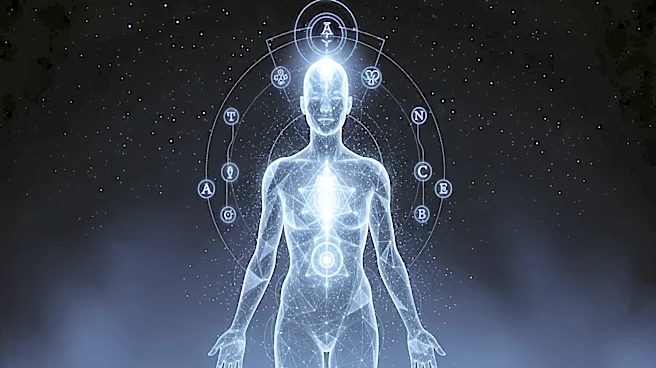



The concept of the subtle body, while rooted in Eastern traditions, has also found a place in Western esoteric thought. Known as the body of light or astral body, this quasi-material aspect of the human form has been explored by philosophers, mystics, and occultists throughout history. In Western traditions, the subtle body serves as a bridge between the physical and spiritual realms, offering insights into the nature of the human psyche and the universe.
This article explores how the subtle body has been interpreted and adapted in Western esoteric traditions.
Historical Roots and Philosophical Foundations
The idea of the subtle body in Western thought can be traced back to the philosophy of Plato, who posited the existence of a starry or astral plane. This plane was believed to consist of the Seven Heavens of the classical planets, with the human psyche being composed of the same material. Neoplatonists like Porphyry and Proclus further elaborated on this concept, describing the subtle body as a luminous vehicle or body of light.
During the Renaissance, philosophers and alchemists such as Paracelsus and John Dee continued to explore the nature of the astral world. They viewed the subtle body as an intermediate form between the earthly and divine realms, capable of traveling through higher planes of existence. This period saw a blending of mystical and scientific thought, with the subtle body serving as a key element in the quest for spiritual knowledge.
Theosophy and the New Age Movement
In the 19th century, the Theosophy movement played a significant role in popularizing the concept of the subtle body in the West. Theosophists like H. P. Blavatsky sought to synthesize Eastern and Western spiritual traditions, translating the Sanskrit term for the subtle body into English. This adaptation, however, often diverged from its original context, leading to new interpretations and applications.
Theosophy's influence extended into the New Age movement, where the subtle body became associated with holistic medicine and alternative healing practices. The idea of the human aura, or energy field, emerged as a popular concept, with the subtle body seen as a means of achieving spiritual and physical well-being.
Modern Interpretations and Scientific Exploration
Today, the subtle body continues to be a subject of interest in both spiritual and scientific circles. Western scientists have begun to explore the concept in relation to meditation and the central nervous system, seeking to understand its potential impact on human consciousness and health.
In modern esoteric practices, the subtle body is often viewed as a tool for personal transformation and spiritual growth. Through meditation, visualization, and other techniques, individuals aim to develop their subtle bodies, enhancing their connection to the divine and unlocking hidden potentials.
In conclusion, the subtle body has evolved into a multifaceted concept within Western esoteric traditions, reflecting a rich tapestry of philosophical, mystical, and scientific influences. Its enduring appeal lies in its ability to bridge the gap between the physical and spiritual, offering a pathway to deeper understanding and enlightenment.