


Maybach is widely recognized for its luxury automobiles, but its history is deeply intertwined with significant events of the 20th century, including World War II. During the war, Maybach played a crucial role in the production of engines for Nazi Germany's tanks and half-tracks. This article delves into Maybach's involvement in the war effort and the impact it had on the company's post-war operations.
Engine Production for Nazi Germany
During World War II, Maybach was tasked with producing
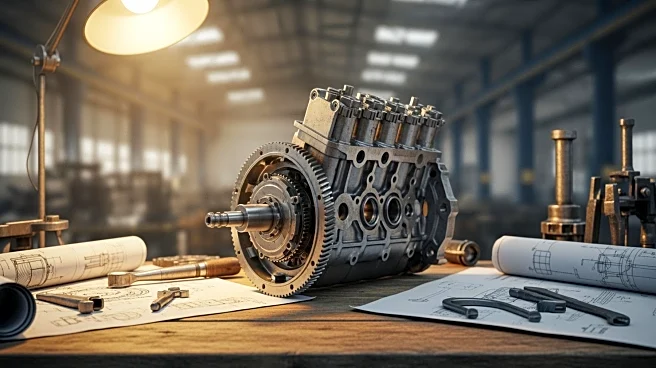
engines for most of Nazi Germany's tanks and half-tracks. The company manufactured engines for various models, including the Panzer I, II, III, IV, and V, as well as the Tiger I and II heavy tanks. Maybach's engines were also used in half-tracks such as the Sd.Kfz. 251 personnel carrier and prime movers like the Sd.Kfz. 9.
The demand for Maybach's engines was high, as they were essential for the German military's armored vehicles. The company's engine plant in Friedrichshafen became a target for Allied bombers, leading to the establishment of an underground factory under Radobýl mountain in Central Bohemia. This period marked a significant chapter in Maybach's history, as the company contributed to the war effort through its engineering expertise.
Post-War Impact and Transition
After World War II, Maybach's factory performed some repair work, but automotive production was never restarted. The company's focus shifted to manufacturing diesel engines for marine and rail purposes. In the 1960s, Maybach came under the control of Daimler-Benz and was renamed MTU Friedrichshafen.
The transition from automotive production to engine manufacturing was a direct result of the war's impact on Maybach. The company's involvement in the war effort had lasting effects on its operations, as it adapted to the changing demands of the post-war era. Maybach's expertise in engine manufacturing continued to be a valuable asset, allowing the company to thrive in new markets.
Legacy and Revival
Despite the challenges faced during and after World War II, Maybach's legacy as a luxury car brand was eventually revived. In 2002, the Maybach name was reintroduced as a standalone ultra-luxury car brand, although it struggled with slow sales and ceased to be a standalone brand in 2013. In 2015, Maybach was reintroduced as a sub-brand of Mercedes-Benz, producing ultra-luxury editions of the S-Class and other models.
Today, Maybach continues to symbolize luxury and excellence in the automotive industry, with its vehicles representing the pinnacle of comfort and performance. The brand's involvement in World War II remains a significant part of its history, highlighting its engineering capabilities and adaptability in the face of adversity.