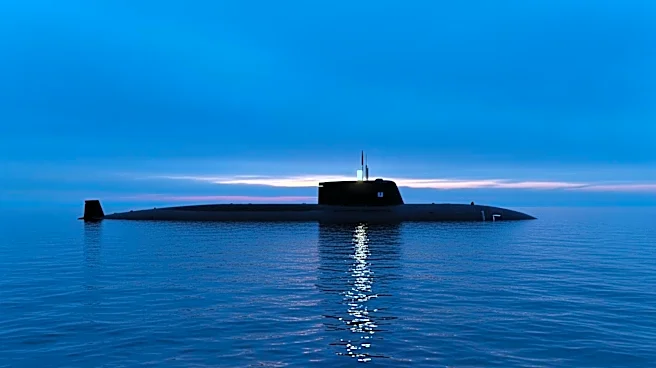



During the Cold War, the USS George Washington (SSBN-598) played a crucial role in the United States' strategy of deterrence. As the first operational ballistic missile submarine, it provided a new dimension to military capabilities, ensuring a constant threat of retaliation against potential aggressors. This article examines the USS George Washington's contribution to Cold War deterrence through its strategic patrols and missile capabilities.
Strategic Patrols
The
USS George Washington embarked on its first operational patrol on November 15, 1960, marking the beginning of a new era in naval warfare. Equipped with 16 Polaris A-1 missiles, the submarine was capable of delivering nuclear warheads to targets over 1,200 nautical miles away. This capability allowed the United States to maintain a credible deterrent, ensuring that any attack would be met with swift and devastating retaliation.
The submarine's patrols were conducted with a dual-crew system, allowing for continuous operations. The Blue and Gold crews alternated patrols, ensuring that the USS George Washington could remain at sea for extended periods. This system maximized the submarine's operational time, providing a constant presence and maintaining readiness to respond to any threats.
Missile Capabilities
The Polaris missiles carried by the USS George Washington were a key component of its deterrent capabilities. These missiles were designed to be launched from a submerged position, making it difficult for adversaries to detect and counteract. The ability to launch missiles from underwater provided a strategic advantage, allowing the submarine to remain undetected while maintaining the ability to strike targets thousands of miles away.
The successful launch of Polaris missiles from the USS George Washington demonstrated the effectiveness of ballistic missile submarines in providing a credible deterrent. The submarine's ability to deliver nuclear warheads to distant targets ensured that any potential aggressor would face significant consequences, contributing to the United States' strategy of deterrence during the Cold War.
Impact on Cold War Strategy
The USS George Washington's introduction and successful operations had a profound impact on Cold War strategy. It provided the United States with a flexible and survivable deterrent, reducing the reliance on land-based missile systems. The strategic advantage provided by ballistic missile submarines contributed to the United States' ability to maintain a strong defense posture during a tense period in global politics.
As the first operational ballistic missile submarine, the USS George Washington played a pivotal role in shaping Cold War strategy and advancing military technology. Its legacy continues to influence the design and deployment of modern submarines, highlighting its importance in the field of naval warfare.