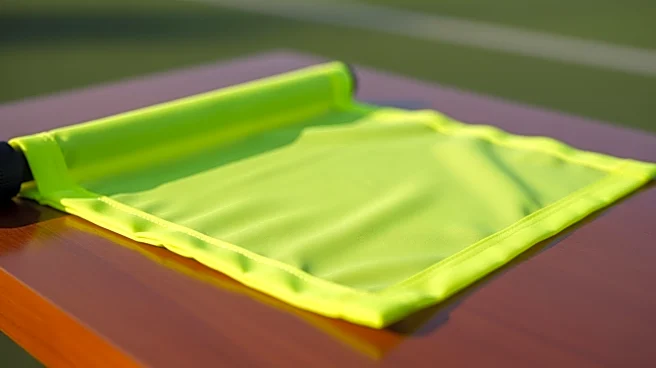





The penalty flag is a vital part of football officiating, but its design has evolved significantly due to safety concerns. Originally, the flag was a simple cloth marker, but over time, its construction has been refined to address issues of player safety and effectiveness. The changes in the flag's design reflect the sport's commitment to minimizing risks while ensuring that officials can accurately signal infractions.
Early Design and Safety Issues
Initially, penalty flags were
weighted with ball bearings to ensure they could be thrown accurately over long distances. However, this practice was largely discontinued after a serious incident in 1999. During a game, NFL referee Jeff Triplette's flag struck Cleveland Browns offensive tackle Orlando Brown Sr. in the eye, causing a severe injury that forced Brown to sit out three seasons. This incident highlighted the potential dangers of using heavy materials in flag design and led to a reevaluation of how flags were constructed.
Innovations in Flag Construction
In response to safety concerns, the materials used to weight penalty flags were changed. Today, flags are typically weighted with sand or beans, which are less likely to cause injury if they accidentally hit a player. This change not only improved safety but also maintained the flag's functionality, allowing officials to throw them accurately and ensuring they remain in place despite wind or player movement. The shift from ball bearings to softer materials represents a significant innovation in flag design, prioritizing player safety without compromising the flag's effectiveness.
The Role of the Challenge Flag
In addition to the standard penalty flag, some football leagues have introduced a challenge flag, which is used by coaches to contest referee decisions. This flag is red in American football and yellow in Canadian football, contrasting with the officials' penalty flags. The challenge flag is similar in construction to the penalty flag, ensuring it can be thrown accurately and seen clearly on the field. The introduction of the challenge flag adds another layer of strategy to the game, allowing coaches to influence officiating decisions and potentially change the outcome of plays.
The evolution of the penalty flag's design reflects football's ongoing efforts to balance safety with the need for effective officiating. By addressing safety concerns and introducing innovations like the challenge flag, the sport continues to adapt to new challenges, ensuring that the game remains fair and safe for all participants.