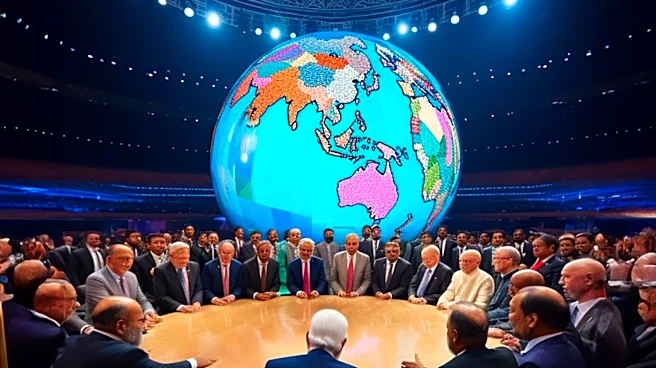










The 2018 North Korea–United States Singapore Summit was a landmark event that drew attention from around the world. As the first meeting between a sitting U.S. president and a North Korean leader, it sparked a wide range of reactions from the international community. Countries across the globe expressed their views on the summit's outcomes and its implications for global peace and security.
Positive Reactions and Support
Many countries welcomed the summit as a positive step towards
peace and stability on the Korean Peninsula. South Korea, in particular, hailed the meeting as "talks of the century," with President Moon Jae-in expressing hope for bold decisions from both leaders. The South Korean government viewed the summit as a reflection of the leaders' determination to resolve longstanding issues and move towards denuclearization.
China also expressed appreciation for the diplomatic efforts, with General Secretary Xi Jinping engaging in dialogue with President Trump prior to the summit. China viewed the meeting as a crucial step in addressing the North Korean nuclear issue through peaceful means. Similarly, Russia's Foreign Minister Sergey Lavrov described the summit as a step in the right direction, emphasizing the importance of a legal arrangement between the U.S. and North Korea for normalizing the situation on the Korean Peninsula.
Cautious Optimism and Concerns
While the summit was generally well-received, some countries expressed cautious optimism and concerns about the lack of concrete details in the joint statement. Japan, for instance, appreciated the diplomatic change in tone but cautioned against compromising on North Korea's missile program. Prime Minister Shinzō Abe emphasized the need for complete denuclearization and expressed a desire for a bilateral meeting with North Korea to address the issue of abducted Japanese citizens.
Germany's Chancellor Angela Merkel viewed the talks as a "gleam of hope" for resolving North Korea's nuclear weapons issue, while also acknowledging the challenges ahead. The European Union praised the summit as a crucial step towards denuclearization and expressed readiness to support follow-on negotiations.
Skepticism and Criticism
Despite the positive reception from many quarters, some countries and experts remained skeptical about the summit's outcomes. Critics pointed to the vague language of the joint statement and the lack of specific commitments from North Korea regarding denuclearization. Concerns were also raised about the suspension of joint military exercises between the U.S. and South Korea, a move that some viewed as a concession to North Korea.
Iran, for example, expressed distrust towards the United States, questioning the reliability of any agreement reached with North Korea. Similarly, some U.S. lawmakers and foreign policy experts voiced concerns about the wisdom of agreeing to a summit without sufficient preparations, given the lack of trust between the two nations.
Overall, the international reactions to the 2018 Singapore Summit highlighted the complexities of global diplomacy and the diverse perspectives on achieving peace and stability on the Korean Peninsula. While the summit was a significant diplomatic milestone, it also underscored the challenges that remain in addressing the North Korean nuclear issue.