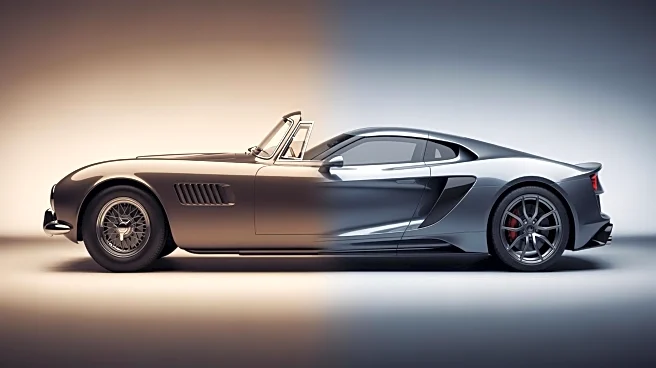

Grand touring cars, often abbreviated as GT, have a rich history that traces back to the early 20th century. These vehicles are designed for high-speed, long-distance driving with a focus on luxury and comfort.
Over the decades, the concept of grand touring has evolved significantly, influenced by technological advancements and changing consumer preferences.
Origins and Early Development
The concept of grand touring cars originated in Europe in the early 1950s. The term itself is derived from the Italian phrase "gran turismo," which became popular in the English language during this period. The Lancia Aurelia B20 GT, introduced in 1951, is often credited as one of the first true grand tourers. This vehicle set the standard for what a GT car should be: a blend of performance, comfort, and style.
In the post-war era, European manufacturers like Ferrari, Jaguar, and Aston Martin began producing vehicles that embodied the grand touring ethos. These cars were not only fast but also offered a level of luxury and refinement that was unmatched by other vehicles of the time. The Ferrari 250 GT and the Aston Martin DB5 are classic examples of early grand tourers that captured the imagination of car enthusiasts worldwide.
The Golden Age of Grand Touring
The 1960s and 1970s are often considered the golden age of grand touring cars. During this time, manufacturers continued to refine the concept, producing vehicles that were both powerful and luxurious. The introduction of the Ferrari 250 GTO in the early 1960s marked a significant milestone in the evolution of GT cars. This model was not only a commercial success but also dominated the racing circuits, further cementing the reputation of grand tourers as high-performance vehicles.
In addition to Ferrari, other manufacturers like Porsche and Mercedes-Benz also made significant contributions to the grand touring segment. The Porsche 911 and the Mercedes-Benz 300 SL are iconic models that exemplify the blend of performance and luxury that defines a grand tourer. These vehicles were designed to offer a comfortable ride over long distances while still delivering exhilarating performance.
Modern Grand Tourers
Today, the concept of grand touring has evolved to include a wide range of vehicles, from high-performance sports cars to luxury sedans. Modern GT cars continue to prioritize comfort and performance, but they also incorporate advanced technology and safety features. Manufacturers like BMW, Audi, and Bentley have embraced the grand touring ethos, producing vehicles that cater to a diverse range of consumers.
The evolution of grand touring cars reflects broader trends in the automotive industry, including the increasing demand for vehicles that offer both performance and luxury. As technology continues to advance, the future of grand touring cars looks promising, with manufacturers poised to push the boundaries of what these vehicles can achieve.