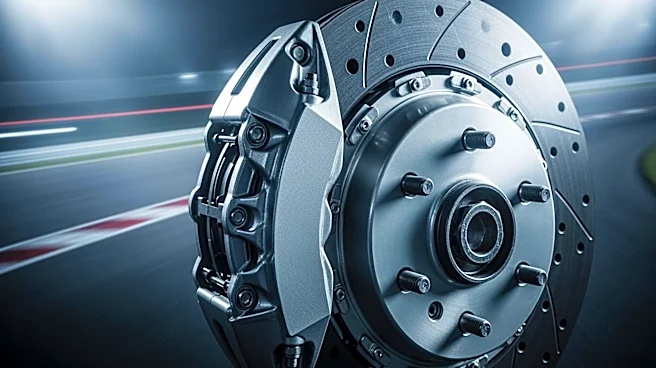

In the world of racing, every detail counts when it comes to optimizing performance and gaining a competitive edge. One such detail is brake balance, a critical factor that influences how a race car handles and performs on the track. Brake balance, or brake bias, refers to the distribution of braking force between the front and rear wheels, and it plays a significant role in a car's ability to navigate corners and maintain speed.
Importance of Brake Balance in Racing
In racing, the ability
to brake efficiently and effectively can make the difference between winning and losing. Brake balance affects how quickly a car can decelerate and how it behaves during cornering. A well-adjusted brake balance allows drivers to maintain control and stability, especially when navigating tight turns at high speeds. In formula car racing, brake balance is regularly adjusted throughout a lap to match the car's traction and grip conditions.
Racing cars often have adjustable brake balance systems that allow drivers to fine-tune the distribution of braking force. This adjustment is crucial for adapting to different track conditions, weather, and driving styles. For example, a greater braking force may be distributed to the front wheels (e.g., 55/45) to match the vehicle's grip during braking. This setup helps stabilize the car and prevent oversteer, where the rear of the car swings out during a turn.
Advanced Brake Balance Systems
Modern racing cars are equipped with advanced brake balance systems that provide precise control over braking force distribution. Brake-by-wire systems, for instance, allow for dynamic adjustment of brake balance through a turn. This technology enables drivers to reduce rear-brake distribution when entering a corner and increase it as they approach the apex, enhancing stability and control.
In Formula One, drivers can adjust brake migration using a rotary switch on the steering wheel. This feature allows for real-time adjustments to brake balance, optimizing performance for each section of the track. Such advanced systems are essential for maintaining competitive lap times and ensuring the car's handling remains predictable and responsive.
Brake Balance and Tire Management
In endurance racing, managing tire wear is as important as maintaining speed. A balanced brake system can help extend tire life by ensuring even wear across all four tires. For endurance races, a more even brake balance, such as 50/50, may be desirable to maximize tire longevity and maintain consistent performance over long distances.
By understanding and adjusting brake balance, racing teams can enhance their car's performance and gain a competitive advantage. Whether it's through mechanical adjustments or advanced electronic systems, brake balance remains a key factor in the pursuit of racing excellence.