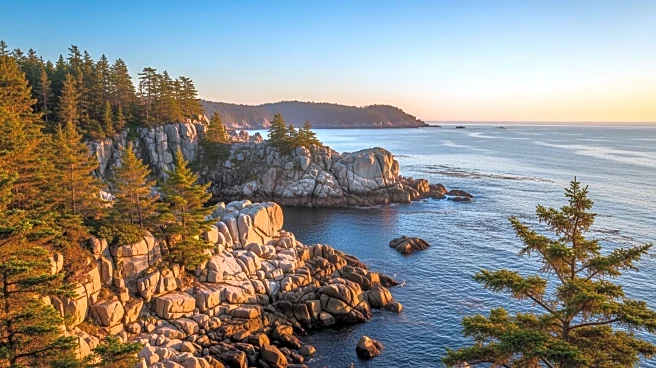

Acadia National Park, located on the coast of Maine, is a testament to the dedication of early conservationists who sought to preserve its natural beauty. Established in 1919, the park has a rich history
that reflects the efforts of individuals like George B. Dorr and John D. Rockefeller Jr. This article delves into the historical timeline of Acadia National Park, highlighting the key events and figures that contributed to its creation and expansion.
Early Beginnings and Establishment
The origins of Acadia National Park can be traced back to the late 19th century when Mount Desert Island became a popular summer retreat for wealthy families. Among these families were the Rockefellers, Carnegies, and Vanderbilts, who were drawn to the island's scenic beauty. Despite the influx of visitors, there was a strong desire to preserve the island's natural landscapes. This led to the formation of the Hancock County Trustees of Public Reservations in 1901, spearheaded by Charles William Eliot and George B. Dorr.
In 1916, President Woodrow Wilson established Sieur de Monts National Monument, marking the first step towards federal protection of the area. George B. Dorr, often referred to as the "father of Acadia National Park," played a crucial role in this process. He advocated for the monument's creation and later served as its first superintendent. In 1919, the monument was redesignated as Lafayette National Park, becoming the first national park east of the Mississippi River.
Expansion and Renaming
The park continued to grow in the following years, thanks in part to the generosity of John D. Rockefeller Jr. Between 1919 and 1931, Rockefeller funded the construction of a network of carriage roads, bridges, and gatehouses within the park. His contributions not only enhanced the park's infrastructure but also helped preserve its natural beauty by restricting automobile access.
In 1929, the park was renamed Acadia National Park in honor of the former French colony of Acadia, which once included parts of Maine. This name change was part of a broader effort to expand the park's boundaries, which included the donation of the Schoodic Peninsula by the heirs of John Godfrey Moore. The renaming and expansion efforts were largely driven by conservationist George Dorr, who continued to advocate for the park's growth until his death in 1944.
Legacy and Preservation
Today, Acadia National Park encompasses over 49,000 acres of diverse landscapes, including mountains, coastlines, and woodlands. The park's historical development is a testament to the vision and dedication of early conservationists who recognized the importance of preserving natural spaces for future generations. The efforts of individuals like George B. Dorr and John D. Rockefeller Jr. have ensured that Acadia remains a cherished national treasure, attracting millions of visitors each year.
The park's history is not only a story of preservation but also one of community and collaboration. It serves as a reminder of the impact that dedicated individuals can have in protecting and preserving the natural world for the enjoyment and benefit of all.