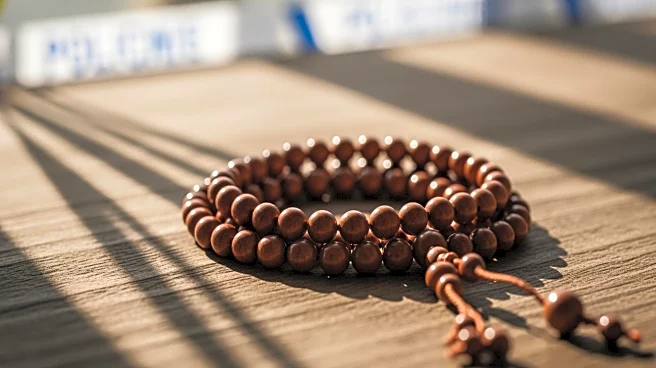




Japa is a profound meditative practice found in Hinduism and Buddhism, involving the repetition of a mantra or divine name. This spiritual discipline is deeply rooted in the traditions of these religions and serves as a means to foster self-realization and intimacy with a divine power. The practice of Japa is not only a form of meditation but also a way to connect with the spiritual essence of the universe.
The Essence of Japa
Japa, derived from the Sanskrit root 'jap-',
means to utter in a low voice or repeat internally. This practice is integral to both Hinduism and Buddhism, where it is used to focus the mind and cultivate a sense of peace and spiritual awareness. In Hinduism, Japa is often performed using a string of beads known as a japamala, which helps in counting the repetitions of the mantra. The japamala typically consists of 108 beads, a number considered sacred in many spiritual traditions.
In Buddhism, particularly in Tibetan Buddhism, Japa is a common practice that involves the use of prayer wheels. These wheels are inscribed with mantras, and spinning them is believed to have the same effect as orally reciting the prayers. The practice of Japa in Buddhism is seen as a way to purify the mind and accumulate merit, which is essential for spiritual progress.
Varieties and Methods of Japa
Japa can be performed in various ways, each with its own significance and method. Vaikhari Japa involves reciting the mantra aloud, which is often used in group settings or when concentration is difficult. Upamshu Japa is a quieter form, where the mantra is whispered, and is considered more effective than Vaikhari Japa. The most advanced form is Manasika Japa, where the mantra is recited silently in the mind, believed to be the most potent form of Japa.
Another interesting form is Likhita Japa, where the mantra is written down repeatedly. This method combines the physical act of writing with the mental focus of recitation, creating a powerful meditative experience. Practitioners often use special books for Likhita Japa, sometimes creating decorative patterns with the written mantras.
The Spiritual Goals of Japa
The ultimate aim of Japa varies depending on the practitioner's spiritual goals. In Hinduism, it may be used to achieve moksha, or liberation from the cycle of birth and death. In Buddhism, the goal might be nirvana, the cessation of suffering and the realization of enlightenment. Regardless of the specific aim, Japa is a tool for deepening one's spiritual practice and connecting with the divine.
Through consistent practice, individuals may reach a state known as ajapa japa, where the mantra repeats itself in the mind without conscious effort. This state is akin to the Christian concept of unceasing prayer and represents a profound level of spiritual attainment. Japa, therefore, is not just a practice but a journey towards spiritual awakening and inner peace.