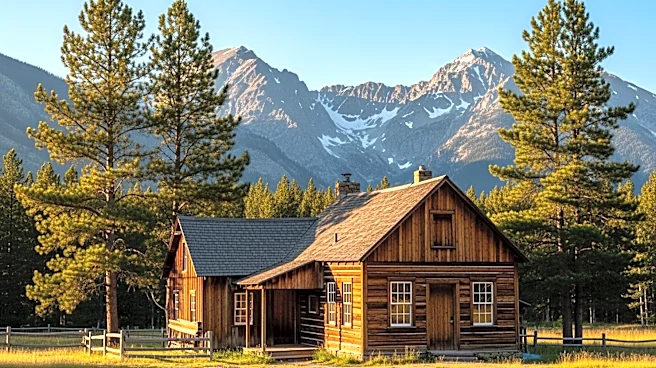








Aspen, Colorado, is a city with a rich history that has evolved significantly over the years. From its beginnings as a mining camp to its current status as a world-renowned ski resort and cultural hub, Aspen's journey is a fascinating tale of transformation and resilience. This article explores the key historical milestones that have shaped Aspen into the vibrant community it is today.
The Mining Boom and Bust
Aspen's story begins in 1879 when it was founded as a mining camp
during the Colorado Silver Boom. The city was initially named Ute City, but it was later renamed Aspen due to the abundance of aspen trees in the area. The mining boom brought prosperity to the region, and by 1891 and 1892, Aspen had become the most productive silver-mining district in the United States, surpassing even Leadville.
However, the prosperity was short-lived. The Panic of 1893 led to a collapse in the silver market, causing economic turmoil in Aspen. Many mines closed, and the population dwindled as miners left in search of new opportunities. This period, known as "the quiet years," saw Aspen's population decline to fewer than 1,000 by 1930.
The Rise of the Ski Resort
Aspen's fortunes began to change in the mid-20th century when it was developed into a ski resort. The transformation was spearheaded by industrialist Walter Paepcke, who purchased and redeveloped many properties in the city. In 1946, the Aspen Skiing Company was founded, and Aspen Mountain was developed into a ski resort. The city quickly gained recognition as a premier skiing destination, hosting the FIS World Championships in 1950.
Paepcke also played a crucial role in establishing Aspen as a cultural center. He helped found the Aspen Music Festival and School, the Aspen Institute, and the Aspen Center for Physics, all of which have international significance. These institutions contributed to Aspen's reputation as a hub for arts and intellectual pursuits.
Aspen's Modern Era
In the late 20th century, Aspen became a popular retreat for celebrities and the wealthy. Figures like Hunter S. Thompson and John Denver helped popularize the city among the counter-cultural youth of the 1970s. Aspen's image as a playground for the rich and famous was solidified, and the city continued to grow.
Today, Aspen is a year-round destination known for its outdoor recreation, cultural events, and luxury real estate. The city's real estate market is among the most expensive in the world, reflecting its status as a premier location for second homes and vacation properties. Despite its transformation, Aspen retains its unique charm and continues to attract visitors from around the globe.